
Alternate-nostril-breathing-vedicwibes-ishita-sengupta

Nadi Shodhana, a simple alternate nostril breathing practice for mental clarity, stress relief, and inner balance. Discover the calming power of Simple breath. Deep impact. Real calm. 

A Personal Note Before We Begin...

Let me ask you something personal:
Have you ever felt like your mind and body are just not in sync?

Like you’re going through the motions — wake up, chores, work, family — but inside, there’s a quiet hum of anxiety, fogginess, or simply… disconnection?

If you nodded “yes,” welcome. You’re not alone. Many of us — especially after our 40s — begin craving more than just productivity. We long for clarity, calmness, and a sense of inner alignment. And here’s the beautiful part:

Sometimes, all it takes is your breath.

Enter: Nadi Shodhana, also known as Alternate Nostril Breathing — an ancient yet practical technique that’s like a soothing balm for your nervous system.

Let’s dive in gently.

What Is Nadi Shodhana?

In Sanskrit: Nadi = energy channel, Shodhana = purification


Nadi-shodhana-pranayama-vedicwibes-ishitasengupta

Together, Nadi Shodhana Pranayama means purifying the subtle energy channels of the body through breath.

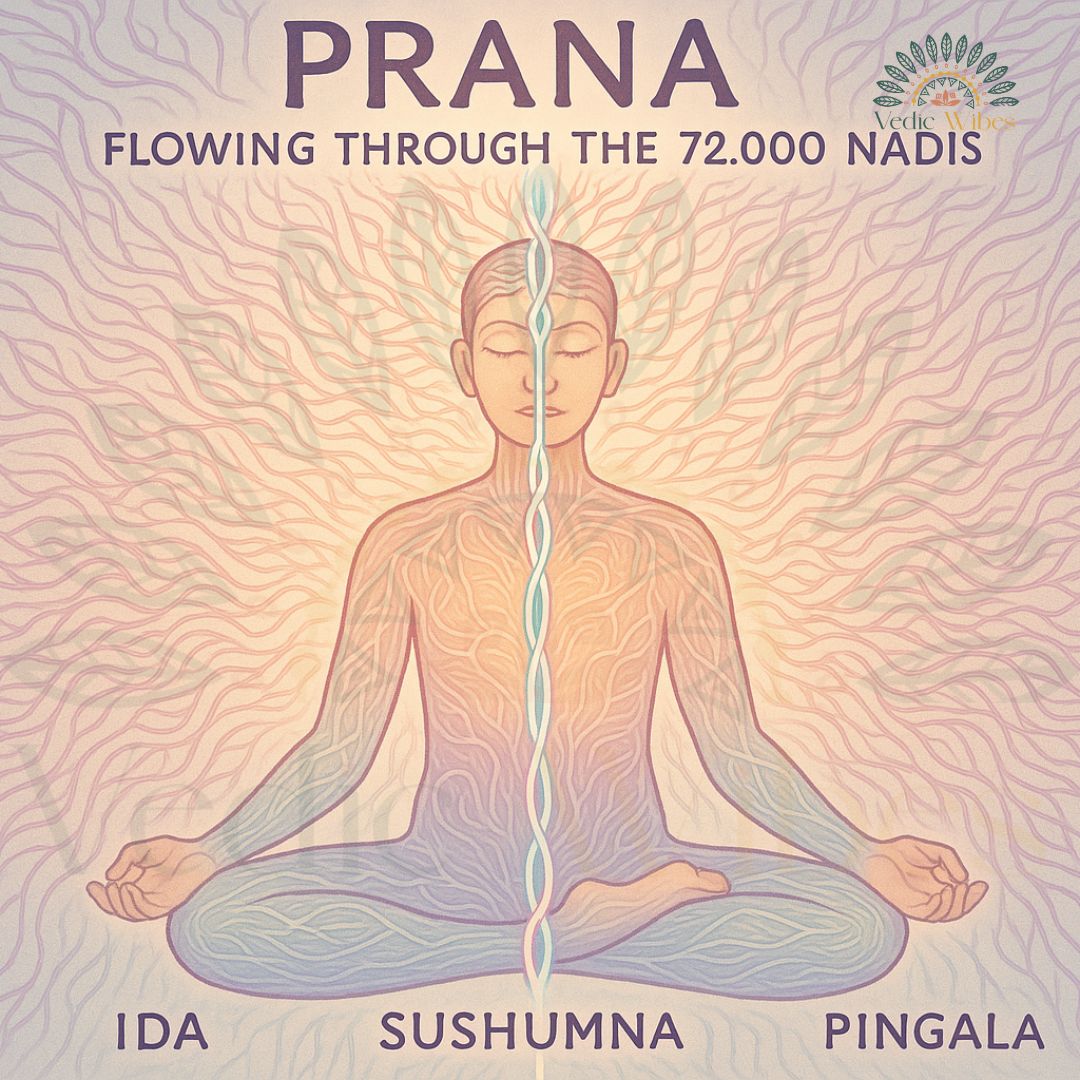
It’s a form of alternate nostril breathing that balances the two main energy flows — the ida (left channel) and pingala (right channel), bringing harmony between your body and mind.

You might have heard it by other names:
Nadi Shodhan Pranayama, Anulom Vilom, Alternate Nose Breathing, or Alternate Nasal Breathing. They’re similar in function, though there are subtle differences in the technique.

A Wisdom from the Ancient Texts

benefits-nai-shodhana-vedic-wibes-ishita-sengupta

The Ashtanga Hridayam, one of Ayurveda’s foundational texts, says:

“Pranayama should be done daily, as it clears the nadis and calms the mind.”

This is not just poetic — modern science now echoes this ancient wisdom. Research has shown that nostril breathing exercises can reduce stress, improve heart rate variability, and even help with sleep and digestion.

Isn’t it incredible that something as basic as breath can be so powerful?

Why Try Alternate Nostril Breathing After 40?

Let’s be real — our 40s and 50s are a unique phase. The body changes. The mind often races. Hormones shift. Responsibilities pile up.

Here’s where Nadi Shodhana becomes your ally:

benefits of nadi shodhana pranayama vedic wibes ishita sengupta

Balances Nervous System

It gently stimulates parasympathetic nervous system (your rest-and-digest mode), helping you feel calmer — naturally, without popping a pill.
alternate nostril breathing pranayama vedic wibes ishita sengupta

Clears Mental Fog Gives Clarity

Many of us experience "brain cloud" or forgetfulness. Alternate nostril breathing improves oxygen flow to the brain, sharpening focus and mental clarity.

alternate nostril breathing nadi shodhana vedic wibes ishita sengupta

Helps Hormonal Harmony

By balancing the ida (cooling, feminine) and pingala (heating, masculine) energies, Nadi Shodhana indirectly supports hormonal balance.
alternate nostril breathing technique vedic wibes ishita sengupta

Enhances Lungs
Capacity

Especially helpful if you’re dealing with shallow breathing, long COVID effects, or just poor lung stamina.

benefits of nadi shodhana vedic wibes ishita sengupta

Keeps Emotional Resilience

Breathing through alternate nostrils calms the emotional turbulence. It’s a beautiful way to “respond” instead of “react” to life’s stressors.

benefits of nadi shodhana pranayama vedic wibes ishita sengupta

Balances Nervous System

It gently stimulates parasympathetic nervous system (your rest-and-digest mode), helping you feel calmer — naturally, without popping a pill.

alternate nostril breathing pranayama vedic wibes ishita sengupta

Clears Mental Fog Gives Clarity

Many of us experience "brain cloud" or forgetfulness. Alternate nostril breathing improves oxygen flow to the brain, sharpening focus and mental clarity.

alternate nostril breathing nadi shodhana vedic wibes ishita sengupta

Helps Hormonal Harmony

By balancing the ida (cooling, feminine) and pingala (heating, masculine) energies, Nadi Shodhana indirectly supports hormonal balance.

alternate nostril breathing technique vedic wibes ishita sengupta

Enhances Lungs
Capacity

Especially helpful if you’re dealing with shallow breathing, long COVID effects, or just poor lung stamina.

benefits of nadi shodhana vedic wibes ishita sengupta

Keeps Emotional Resilience

Breathing through alternate nostrils calms the emotional turbulence. It’s a beautiful way to “respond” instead of “react” to life’s stressors.

How to Practice Nadi Shodhana: Step-by-Step

You don’t need a yoga mat or incense. Just a quiet spot and a few minutes of your time.

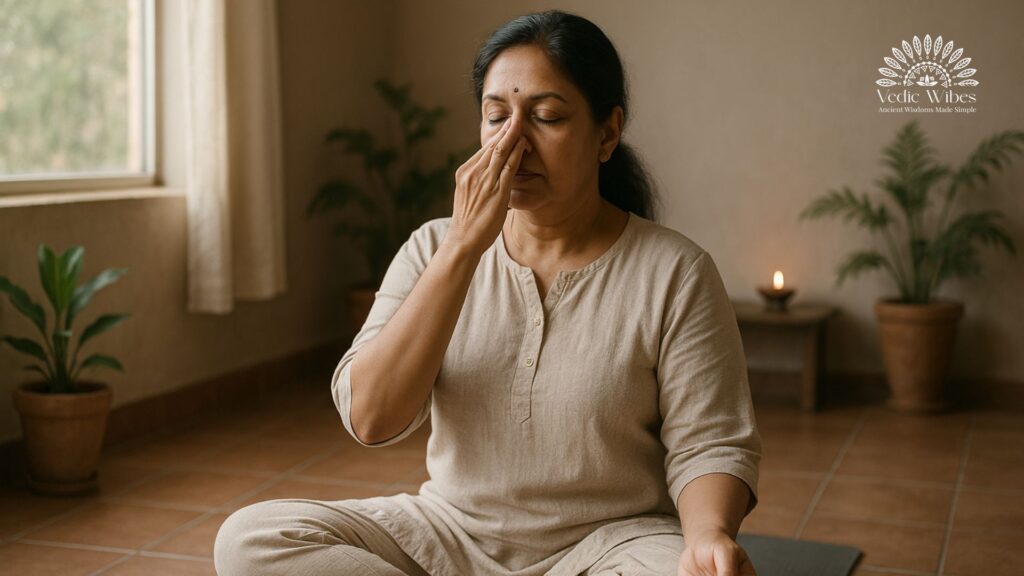
Sit comfortably with your spine straight. You can sit on a chair or on the floor.

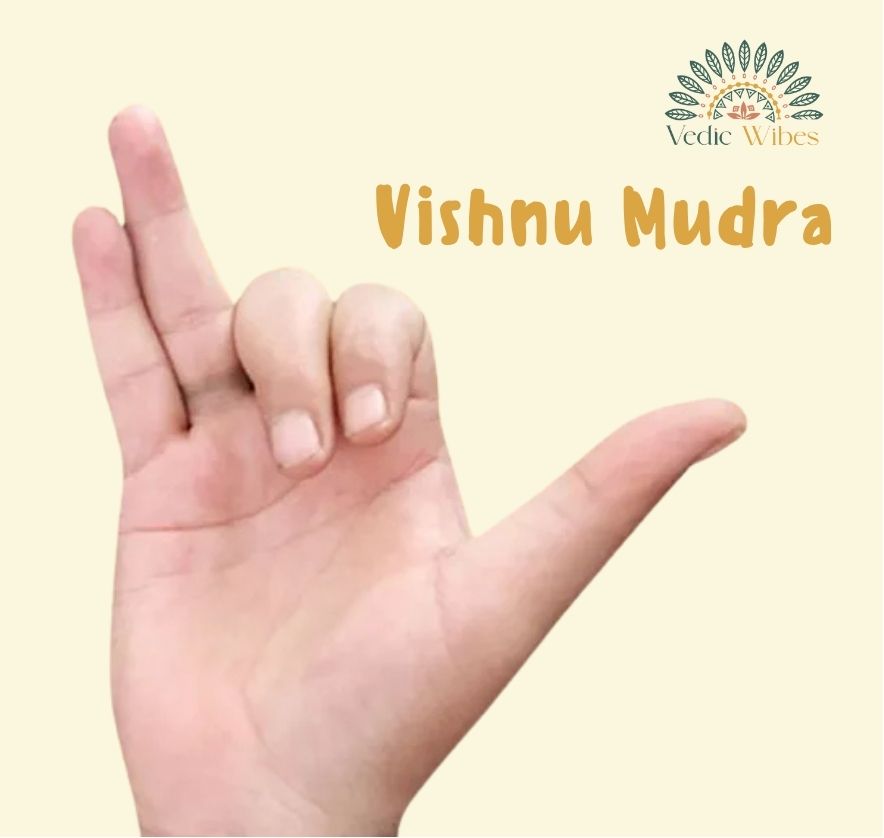
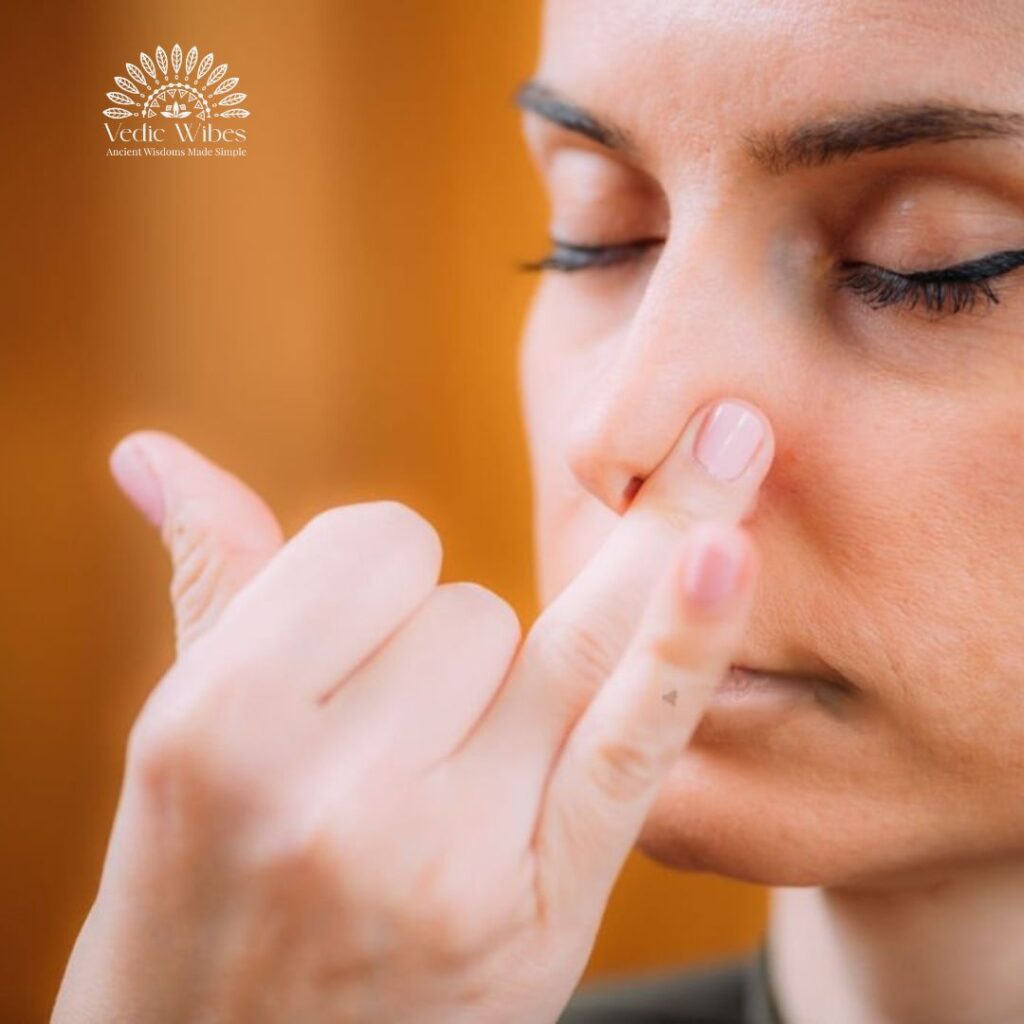
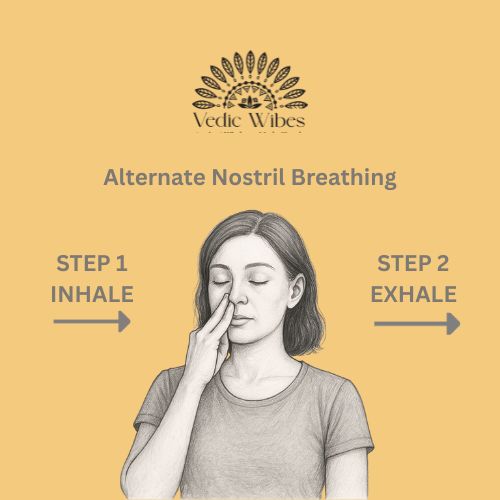
 Fold the index and middle finger of your right hand inward. Use your thumb and ring finger to close the nostrils.

vishnu-mudra-vedic-wibes-ishita-sengupta

Close your right nostril with your thumb and inhale slowly through the left.

Close your left nostril with the ring finger, release the right nostril, and exhale slowly through the right.

Now, inhale through the right, close the right, exhale through the left.

nadi-shodhana-vedic-wibes-ishita-sengupta

That’s one full round.
Start with 5 rounds, gradually increasing to 10 or 15 rounds.

Important: Always breathe slowly, gently, and without force. If you feel dizzy or uncomfortable — stop, rest, and try again later.

Left Nostril Breathing vs Right: What’s the Difference?

Here’s a fascinating nugget from yogic science:

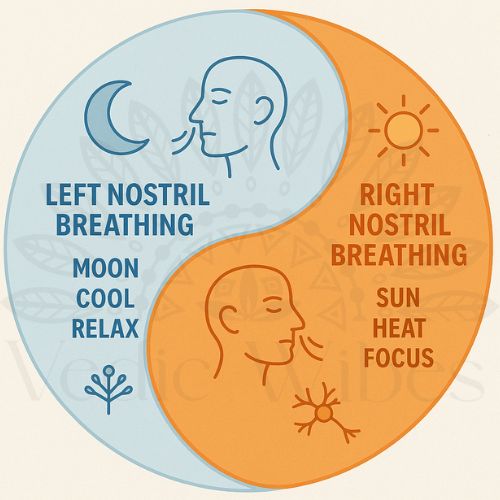
breathing-techniques-vedic-wibes-ishita-sengupta
  • Left nostril (Ida) = Cooling, calming, moon-like. Activates the parasympathetic system.
    Try this when you’re feeling anxious or before sleep.
    (Benefits of left nostril breathing: stress relief, better sleep)
  • Right nostril (Pingala) = Heating, energizing, sun-like. Activates sympathetic system.
    Use this when you need energy or mental alertness.
    (Benefits of right nostril breathing: focus, motivation)

So yes, single nostril breathing has its own targeted benefits too.

How Long Should You Practice?

Morning: 5–10 minutes after waking
Evening: 5 minutes before bed

That’s all it takes.

No apps. No timers. Just you and your breath.

Even 3–5 minutes a day can create noticeable shifts in how you feel. Try it for a week, and you’ll see.

Real-Life Story: “It Changed My Mornings”

Sangeeta, 52, a regular reader of Vedic Wibes, wrote to us recently:

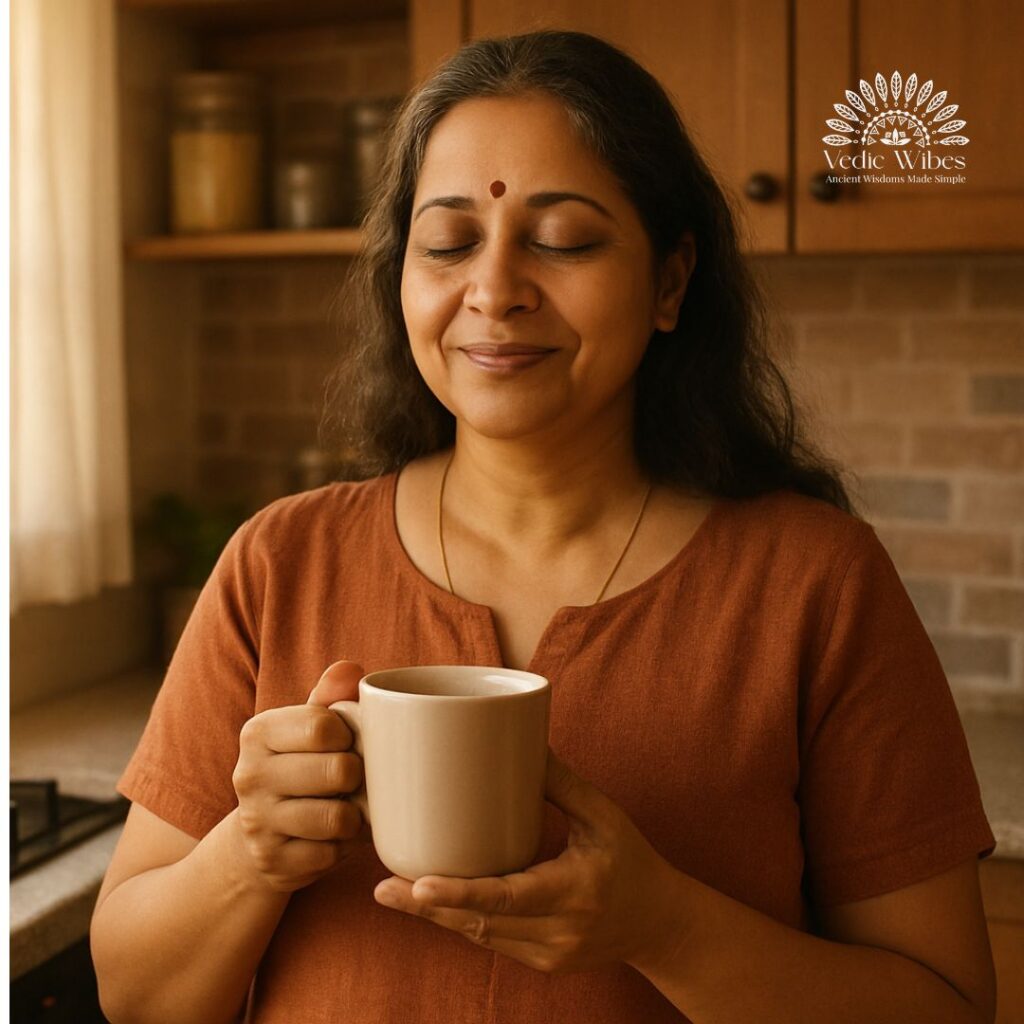
“I used to wake up with tension in my chest. I’d check my phone, worry about my to-do list, and feel overwhelmed before the day even began. A friend told me about Nadi Shodhana. At first, it felt silly — blocking my nostrils and breathing like a child playing a game. But within a few days, I noticed the difference. My mornings are now gentler. Calmer. I even smile while making my tea.”

benefits-of-nadi-shodhana-pranayama-vedic-wibes-ishita-sengupta

It’s not magic. It’s mindfulness — through your nose.

Is It Safe? Any Side Effects?

That’s a valid question, especially if you’ve read about alternate nostril breathing dangers online.

Here’s the truth:
When practiced gently and correctly, Nadi Shodhana is extremely safe.

 Avoid if you have:

  • Severe nasal congestion
  • Serious heart conditions
  • Recent surgeries involving lungs or sinuses
  • Vertigo (start slowly and consult your doctor)

Otherwise, it’s a gentle, non-invasive technique suitable even for seniors.

Beyond Breath: Subtle Energetics of Nadi Shuddhi

In yogic and Ayurvedic philosophy, we have 72,000 nadis — subtle channels through which prana (life energy) flows. Over time, these channels get blocked due to stress, toxins, negative emotions, and irregular lifestyle.

Nadi Shuddhi (purification of nadis) is the ultimate goal of practices like Nadi Shodhana.

Think of it like clearing out the cobwebs from an old temple… the temple being your body and mind.

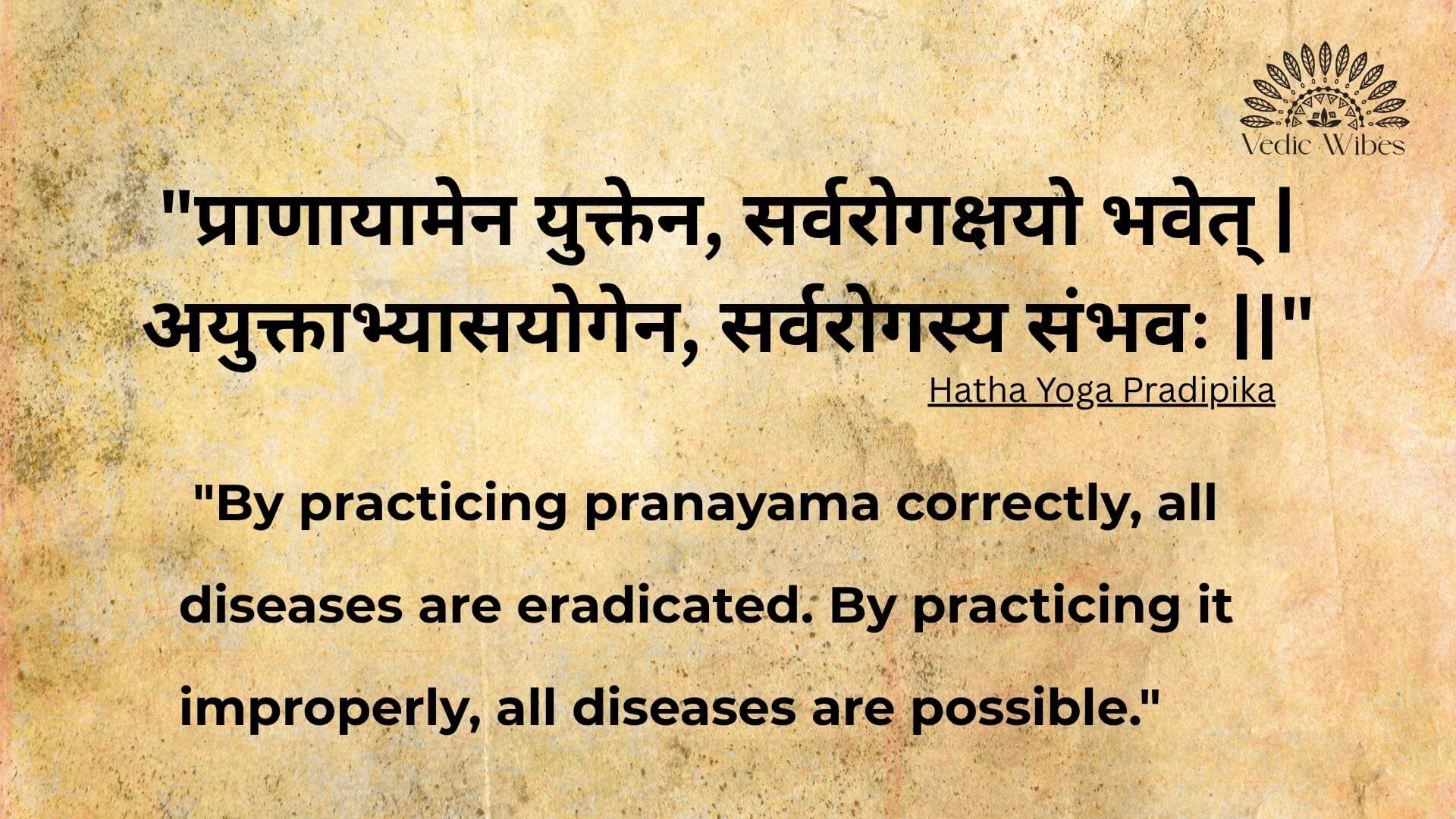
As yogi Swatmarama wrote in the Hatha Yoga Pradipika:
“When the nadis are purified, the breath flows freely through Sushumna, and the mind becomes steady.”

This is where breath becomes more than air — it becomes a bridge to inner stillness.

Bonus Tips for Deepening Your Practice

alternate-nasal-breathing-vedic-wibes-ishita-sengupta
  • Practice after bath or before meals, on an empty stomach
  • Sit near a window or natural light if possible — the breath feels more alive
  • Combine with gentle asanas like seated twists for best results
  • Want to go deeper? Count your breath (inhale 4 counts, exhale 6) or mentally chant “So” while inhaling and “Hum” while exhaling
  • Use left nostril breathing at bedtime if you’re struggling with insomnia

Alternate Nostril Breathing: A Daily Ritual, Not a Quick Fix

Look — this isn’t a trendy biohack. It’s not about instant gratification.

Alternate nostril breathing is a quiet ritual of self-connection.
It’s a small, sacred pause that says:
“I am here. I am whole. I am breathing.”

And if you can commit to just a few minutes daily, over weeks and months — it becomes a doorway. A doorway to peace, balance, and a deeply nourished nervous system.

So, will you give it a try?

Gently Begin Today

Why not start right now? Pause. Sit. Breathe through one nostril… then the other.

Notice how you feel.

And if it makes a tiny difference today, imagine what it can do for you over time.

Come back to this breath, again and again.

Because it’s always here for you.

Share Your Journey

Have you tried Nadi Shodhana or alternate nostril breathing before?
What was your experience? Let me know in the comments or drop a message on vedicwibes.com — I love hearing your stories.

About The Author

17cc75a90911d6dda0d052d8c1ccde8ffa4f6b9cfd55e000523cdebe5f88cc15?s=150&d=mp&r=g
Ishita Sengupta
Vedic Wibes |  More Posts

Ishita Sengupta is a wellness educator and founder of Vedicwibes. She shares practical Ayurvedic tips and mindful living strategies for people looking to live healthier, balanced lives. Her approach blends ancient wisdom with modern practicality, making wellness simple, effective, and enjoyable.


Scroll to Top