
Table of Contents
Toggle5 Ayurvedic Benefits of Vegetable Stew | Vedicwibes
Discover 5 Ayurvedic benefits of Vegetable Stew and learn an easy recipe to balance all doshas naturally.
A Stew That Feeds the Body, Mind, and Spirit
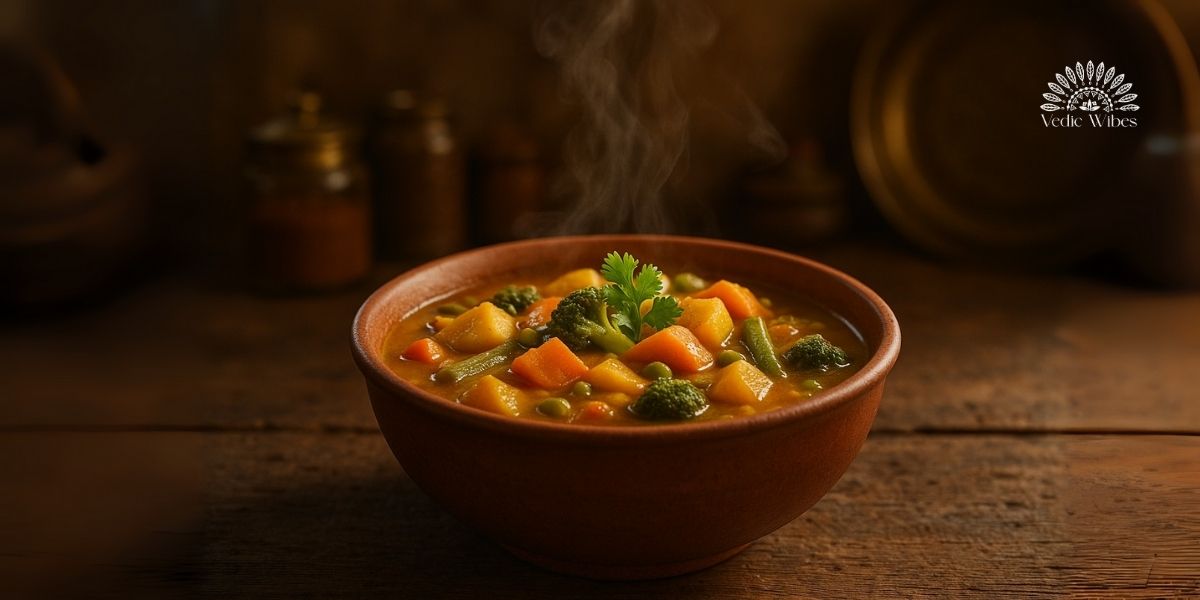
There’s something deeply comforting about a bowl of warm vegetable stew.
Not just the taste. Not just the aroma. But the feeling that it’s doing something good for you from the inside out.
This Tridoshic Vegetable Stew is one of those rare recipes that Ayurveda considers suitable for all three doshas — Vata, Pitta, and Kapha. Whether you run cold, run hot, or feel sluggish, this stew works like a gentle harmoniser.
It’s a recipe I often turn to when seasons change, digestion feels a little off, or I just want a nourishing, easy-to-make meal that doesn’t fight my body’s rhythms.
What Does “Tridoshic” Mean in Ayurveda?
Ayurveda recognises three fundamental energies (doshas) in the body:
- Vata (air + space) — governs movement, creativity, nervous system.
- Pitta (fire + water) — governs digestion, metabolism, sharpness.
- Kapha (water + earth) — governs structure, lubrication, stability.
Most foods balance one or two doshas while aggravating another. A Tridoshic recipe is specially designed to be neutral and beneficial for all three, making it a safe and gentle choice for families, guests, or days when you’re unsure what your body needs.
5 Ayurvedic Benefits of Tridoshic Vegetable Stew
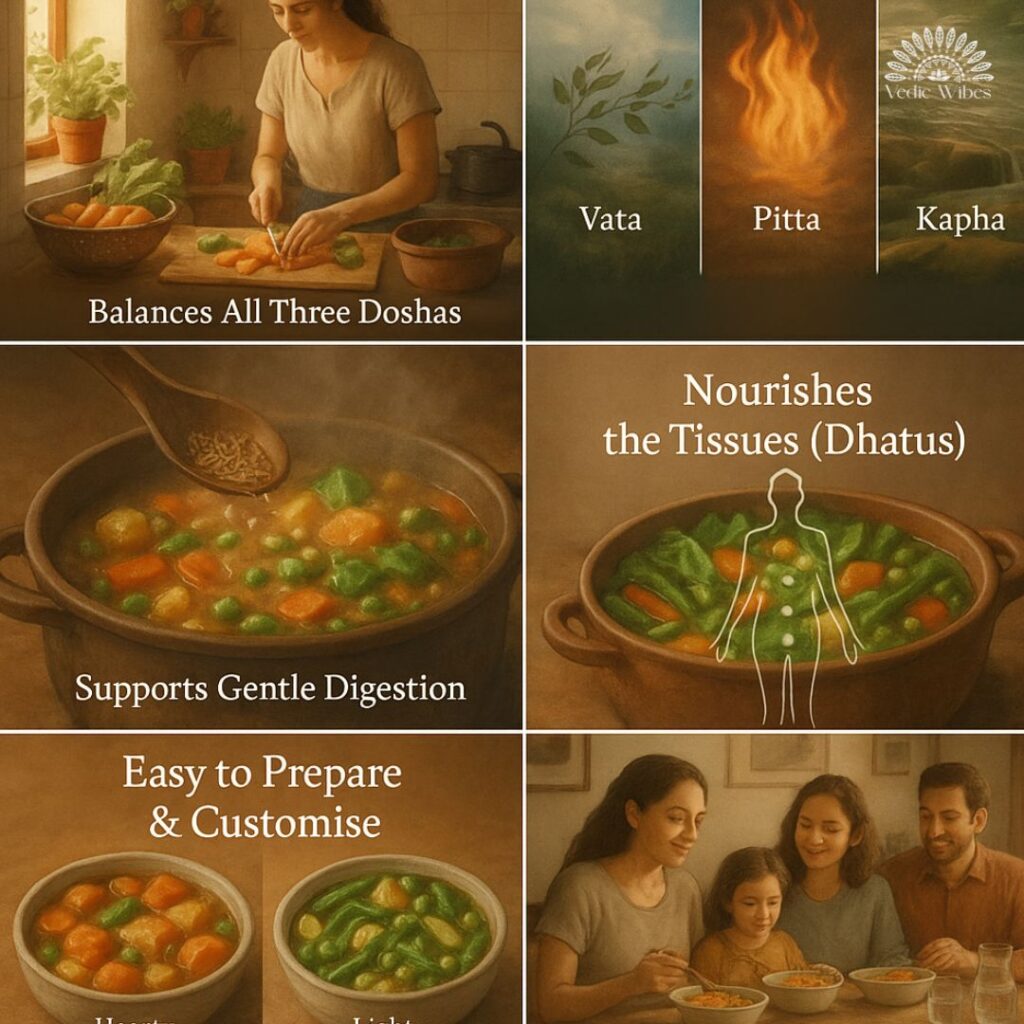
1. Balances All Three Doshas
The ingredients are chosen to keep Vata grounded, Pitta cooled, and Kapha light. It’s like having a personal wellness chef for your constitution.
2. Supports Gentle Digestion
Lightly cooked vegetables, mild spices, and a balanced mix of tastes help your agni (digestive fire) without overwhelming it.
3. Nourishes the Tissues (Dhatus)
This stew contains a variety of vegetables that feed all seven dhatus — from plasma to reproductive tissue — keeping your body nourished on a deeper level.
4. Easy to Prepare and Customise
Ayurveda teaches us to eat with the seasons. This recipe adapts beautifully whether it’s a winter root-veg stew or a summer light-veg version.
5. Keeps the Mind Calm
Warm, mildly spiced, sattvic food has a quieting effect on the nervous system, making it as much a mind-food as a body-food.
When Is the Best Time to Eat This Stew?
Ayurveda recommends having your main cooked meal during midday when digestion is strongest.
- At lunch: it makes for a wholesome, filling meal.
- At dinner: it’s light enough for the stomach but still satisfying, especially in cooler months.
How to Make Tridoshic Vegetable Stew
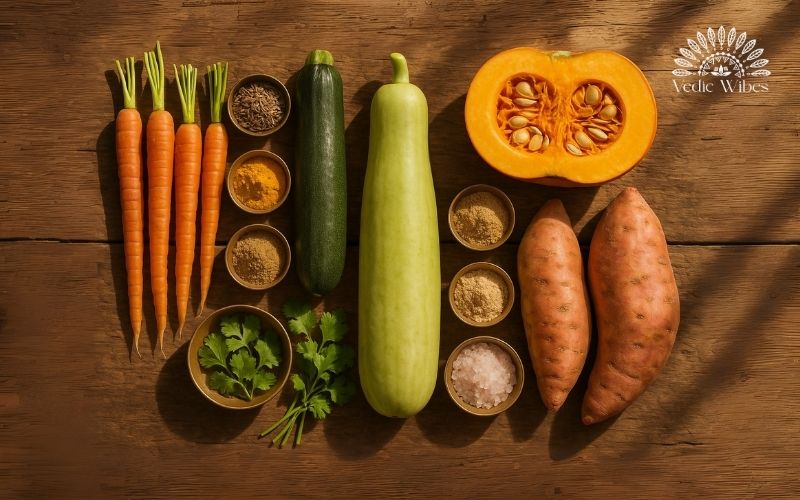
You Will Need:
2 cups mixed seasonal vegetables (carrot, zucchini, beans, pumpkin, bottle gourd, sweet potato)
1 tbsp ghee or coconut oil
1 tsp cumin seeds
½ tsp turmeric powder
½ tsp coriander powder
¼ tsp ginger powder (or fresh grated ginger)
4–5 cups water or light vegetable broth
Rock salt to taste
Fresh coriander leaves for garnish
How To Prepare:
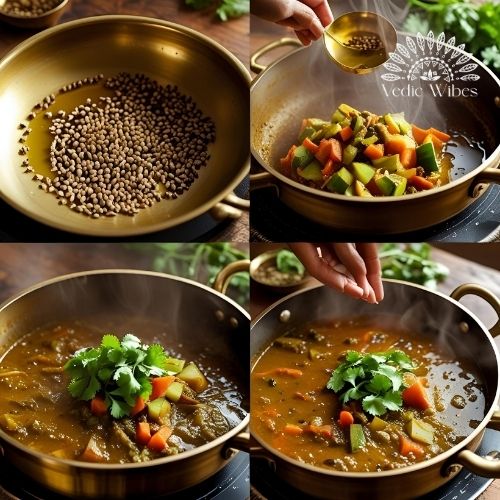
Heat ghee in a heavy-bottomed pan.
Add cumin seeds and let them crackle.
Stir in turmeric, coriander, and ginger powders for a few seconds.
Add the chopped vegetables, sauté lightly.
Pour in water or broth,
Cover, and simmer until vegetables are tender.
Add salt to taste.
Garnish with fresh coriander leaves before serving.
Serving Suggestions for Different Doshas
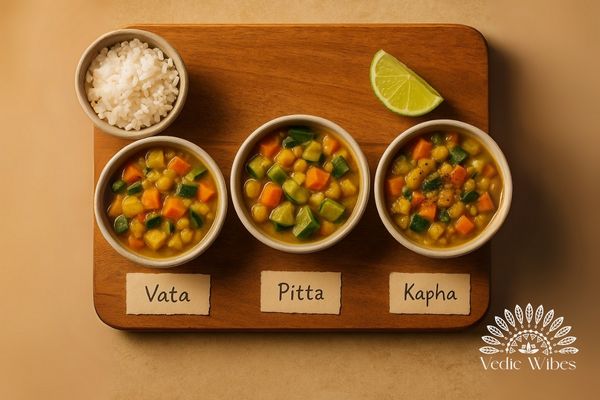
- For Vata: Serve warm with a drizzle of ghee and a small portion of rice.
- For Pitta: Add a dash of lime and avoid excess chilli.
- For Kapha: Keep it light, use less oil, and add more spices like black pepper or dry ginger.
Small Ayurvedic Tweaks for the Stew
- Add mung dal for extra protein without heaviness.
- Include fresh curry leaves for aroma and digestion.
- Sprinkle freshly ground black pepper just before serving for immunity boost.
Ayurvedic Kitchen Wisdom: Making the Most of Your Stew
Storing Leftovers the Right Way
In Ayurveda, fresh food is always preferred because it’s rich in prana (life force). But if you must store it:
- Cool to room temperature before refrigerating.
- Store in a glass or steel container (avoid plastic).
- Consume within 24 hours to retain maximum freshness and energy.
Reheating Without Losing Nutrients
Skip the microwave if you can — it tends to strip the subtle energy from food.
- Warm on the stovetop over low heat.
- Add a splash of warm water or broth to revive texture.
- Avoid boiling repeatedly, as it dulls taste and vitality.
Pairing for a Complete Meal
- For a heavier meal: Add a side of warm rice or millet roti.
- For light detox days: Have it on its own with a small salad of cucumber and beetroot.
- For boosting protein: Stir in lightly cooked mung dal or red lentils.
Seasonal Adjustments
- Winter: Add warming spices like cinnamon or clove in tiny amounts.
- Summer: Keep it light with zucchini, bottle gourd, and fresh coriander.
- Rainy Season: Use more digestive spices like dry ginger and black pepper.
Eating Ritual
Ayurveda says digestion starts in the mind.
Before your first spoonful, pause for a moment of gratitude — to the farmers, to the earth, and to the body that will receive this nourishment.
Your Tridoshic Stew Checklist
- Choose seasonal vegetables.
- Keep spices gentle but aromatic.
- Avoid overcooking — preserve the prana (life force) in food.
- Eat mindfully, without distractions.
- Follow it with warm water or herbal tea.
A Gentle Reminder from Ayurveda
Food is more than fuel. It’s medicine, energy, and a way of connecting with nature’s rhythms.
Next time you feel off-balance, try this stew for a few days. You may find your digestion, mood, and energy quietly shifting back to centre.
About The Author

Ishita Sengupta
Ishita Sengupta is a wellness educator and founder of Vedicwibes. She shares practical Ayurvedic tips and mindful living strategies for people looking to live healthier, balanced lives. Her approach blends ancient wisdom with modern practicality, making wellness simple, effective, and enjoyable.
- Ishita Sengupta

- Ishita Sengupta

- Ishita Sengupta