
Table of Contents
ToggleBest Foods to Pacify Vata Dosha:Ayurveda Diet Guide|Vedicwibes
Discover the best foods to pacify Vata dosha. Learn what to eat, what to avoid, and follow a simple Vata diet plan for balance and everyday wellness.
When the winds pick up outside, do you feel the same inside? Restless thoughts. Dry skin. Trouble sleeping. These are classic signs of Vata dosha imbalance. Ayurveda tells us that when Vata—the energy of air and space—runs high, we need to calm it with grounding, warming foods.
In this guide, we’ll explore the best foods to pacify Vata, how to build a simple Vata diet, and what to avoid. Think of it as your easy, friendly companion for everyday wellness.
What is Vata Dosha in Ayurveda?
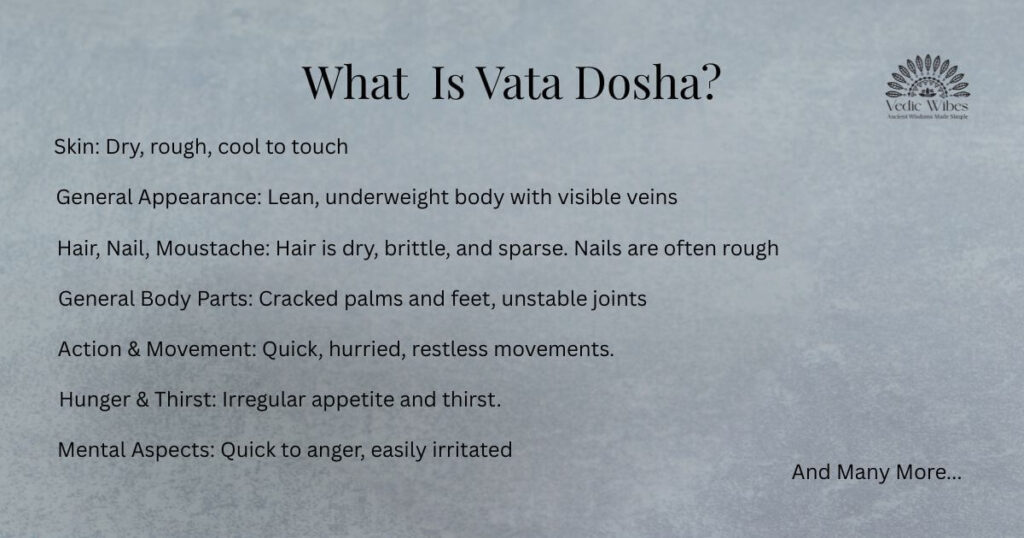
In Ayurveda, the body is governed by three doshas: Vata (air/space), Pitta (fire), and Kapha (earth/water). Vata controls movement—breathing, circulation, thoughts, and even digestion.
When it’s balanced, you feel light, energetic, and creative. When it’s off-balance, you might face:
- Dry skin, hair, or nails
- Constipation or bloating
- Anxiety or overthinking
- Insomnia or light sleep
Food is one of the best tools to restore balance. A proper Vata dosha diet plan can bring stability, warmth, and calm back into your system.
The Golden Rule of a Vata Pacifying Diet
The ancient text Ashtanga Hridayam reminds us:
“Snigdhaushna annapana vata prakopam nihanti”
(Meaning: Warm, unctuous food and drink pacify Vata.)
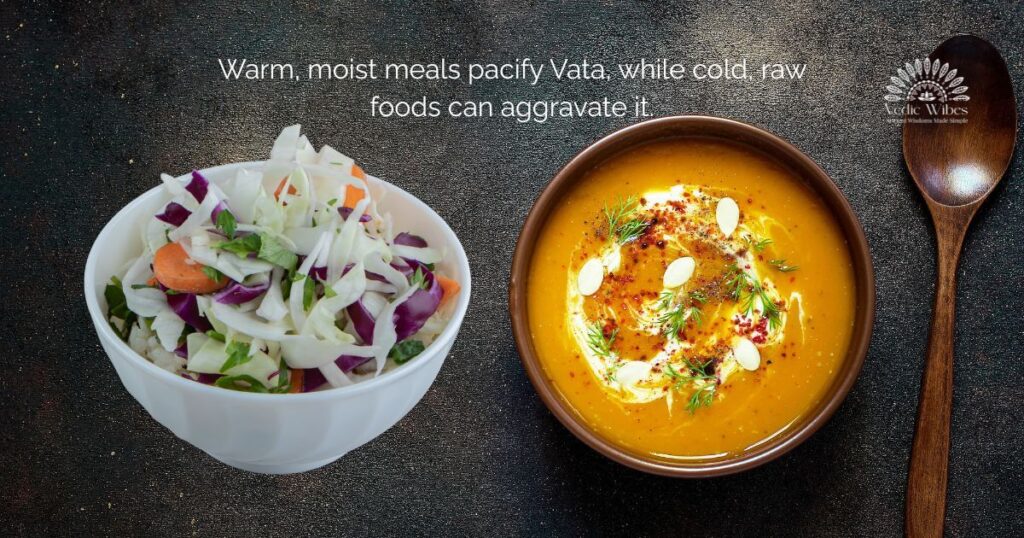
So, the golden rule is simple: choose warm, cooked foods for Vata that are moist, heavy, and nourishing. Avoid dry, cold, and raw.
List of the Best Foods to Balance Vata Dosha
Here’s a clear list of Vata balancing foods to include daily:
1. Warm and Cooked Foods for Vata Balance
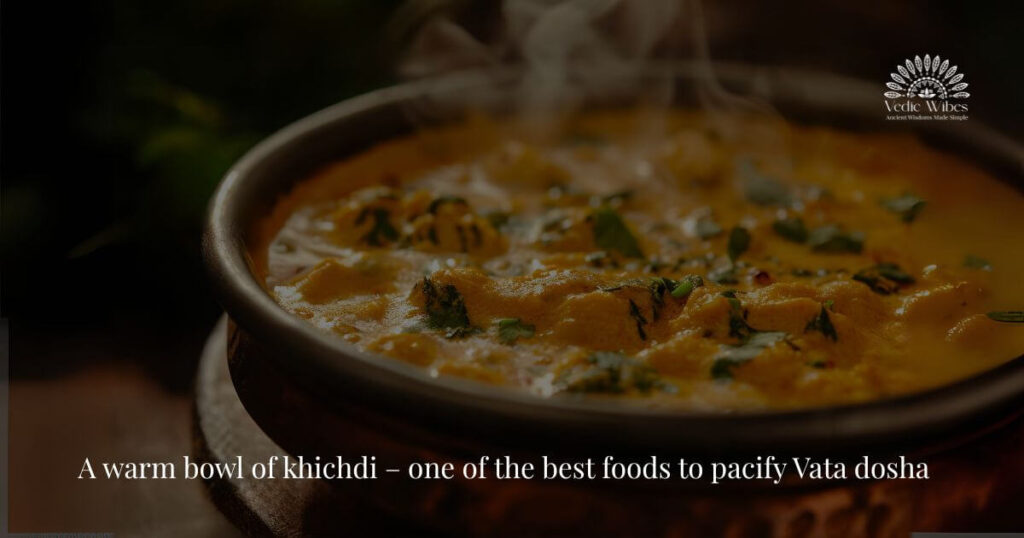
Soups, stews, porridges, and khichdi work wonders. They’re easy to digest and provide comfort. Think of soups and stews for Vata balance as a warm hug for your belly.
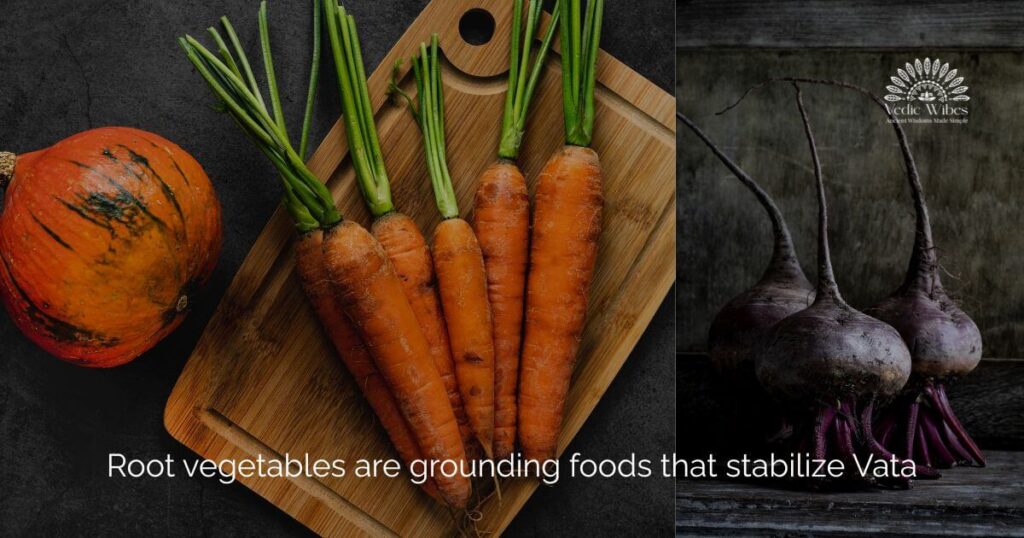
2. Root Vegetables that Ground Vata
Carrots, beets, sweet potatoes, pumpkin—these are grounding foods. Ayurveda calls them “sthirya,” meaning stable. Perfect for calming the airy nature of Vata. Add more root vegetables for Vata dosha in your meals.
3. Ghee and Healthy Oils to Nourish Vata
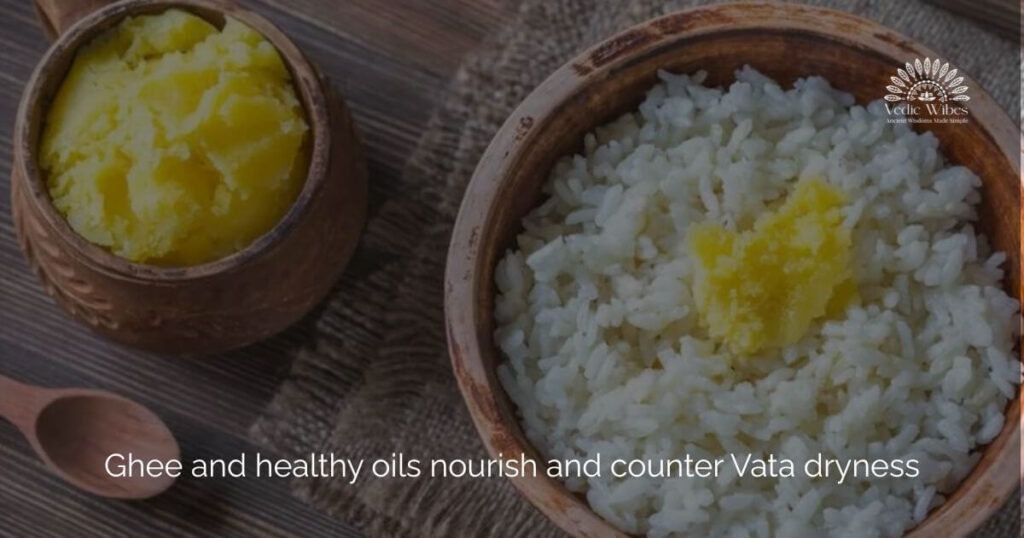
Dryness is Vata’s signature. The cure? Lubrication. Add a spoon of ghee and oils for Vata to your rice, lentils, or even milk. Sesame oil is another classic Ayurvedic favorite.
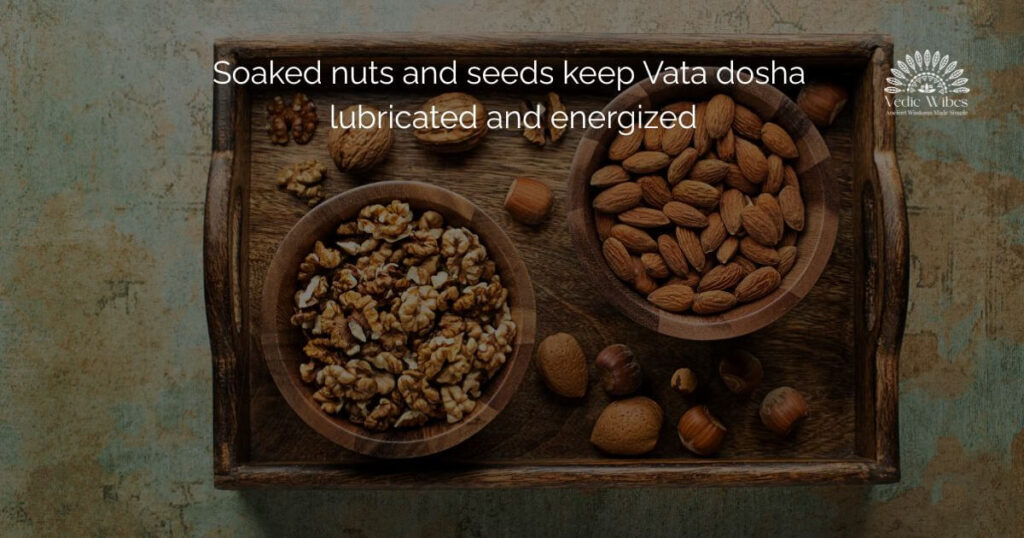
4. Nuts and Seeds for Vata Dosha
Almonds, cashews, walnuts, soaked overnight and peeled. These act like natural body oils. Moderate amounts of nuts and seeds for Vata dosha keep you energized without causing heaviness.
5. Sweet, Sour, and Salty Tastes that Soothe Vata
According to Ayurveda, these three tastes soothe Vata. That’s why sweet sour salty taste Ayurveda guidelines always recommend foods like rice, ripe fruits, yogurt, and a pinch of mineral-rich salt.
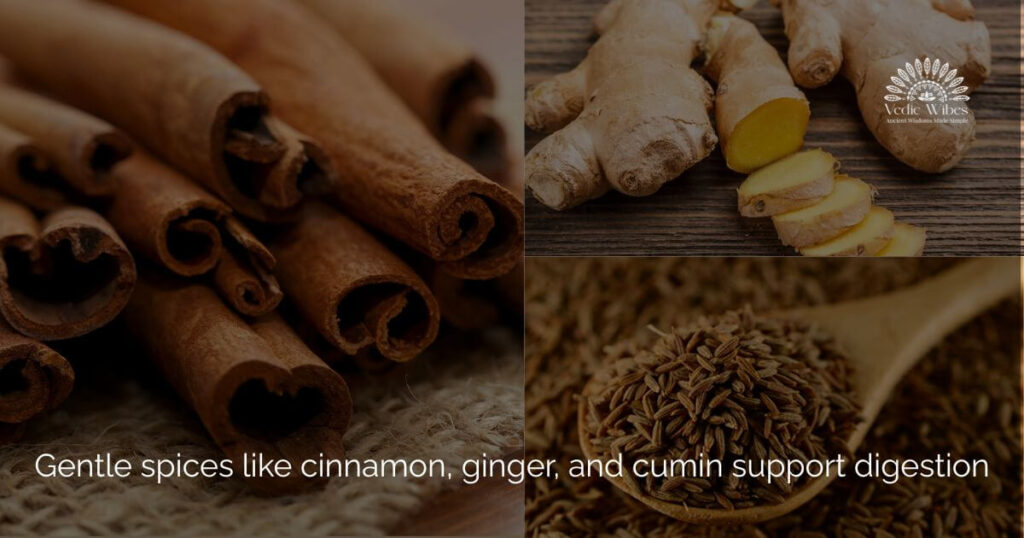
6. Gentle Spices to Support Digestion
Cinnamon, ginger, cumin, cardamom—all warm without overheating. Use spices to balance Vata in your teas and curries. They awaken digestion and keep coldness away.
Foods to Avoid for Vata Imbalance
Not all foods are your friend when Vata is high. Be mindful of these:
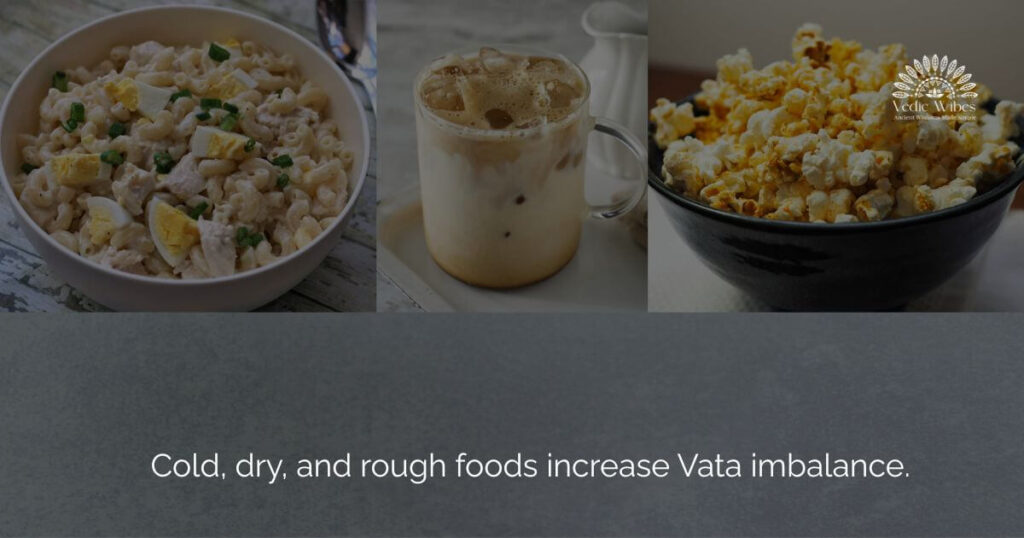
- Cold salads and raw vegetables
- Dry crackers, popcorn, or roasted snacks
- Too much caffeine
- Bitter and astringent foods in excess
These fall under foods to avoid for Vata dosha because they increase dryness, lightness, and movement—exactly what we’re trying to calm.
Simple Vata Dosha Diet Plan (Daily Example)
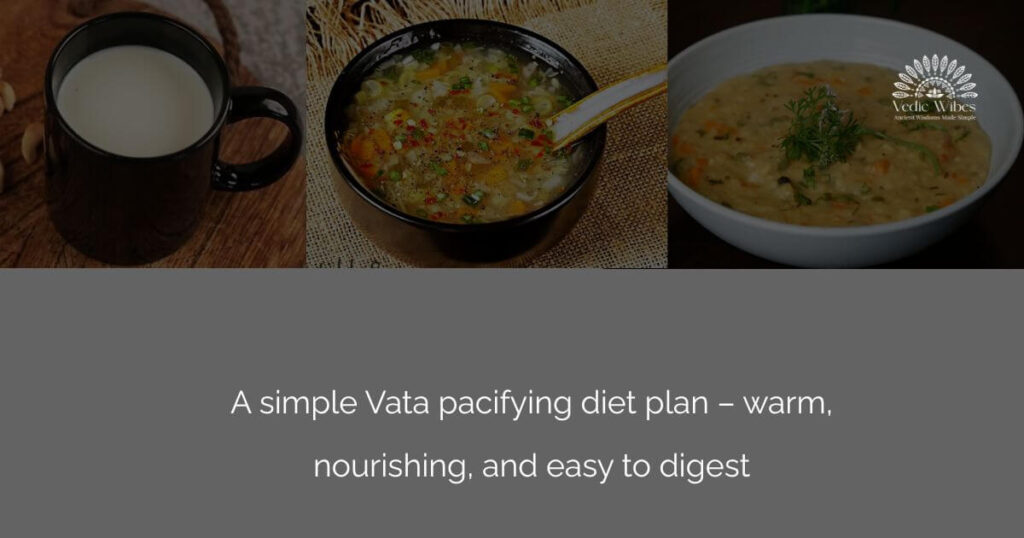
Here’s how a day could look:
- Morning: Warm oatmeal with ghee, cinnamon, and soaked raisins
- Lunch: Khichdi with mung dal, pumpkin, and cumin; side of warm chapati with ghee
- Snack: Stewed apples or a handful of soaked almonds
- Dinner: Vegetable soup (carrot, beet, ginger) with rice and a spoon of ghee
- Before Bed: A cup of warm milk with nutmeg
This Ayurvedic foods to balance Vata plan is light yet nourishing. And it’s simple enough to fit into daily life.
Practical Vata Pacifying Diet Tips
- Eat at regular times. Skipping meals disturbs Vata.
- Keep food warm, moist, and freshly cooked.
- Avoid cold drinks—sip hot water or herbal teas instead.
- Favor grounding activities: calm walks, oil massages, and early bedtimes.
These Vata pacifying diet tips are not just theory. They’re gentle lifestyle choices that deeply support balance.

Final Thoughts on Pacifying Vata with Food
If you often feel restless, dry, or scattered, your body is probably asking for grounding. And the answer lies in your plate. Start adding more Vata dosha foods, enjoy warm comfort meals, and cut down on cold raw bites.
The beauty of Ayurveda is that it doesn’t complicate life. It guides you back to simple, natural ways of living.
So tonight, try a bowl of soup, a spoon of ghee, and see how your body thanks you.
Your next step? Notice how you feel after meals. Keep a small food diary. And if you’d like, explore more about Ayurvedic diet for Vata on Vedicwibes—we’ll walk this wellness journey together.
Frequently Asked Questions About Vata Foods
What are the best foods to pacify Vata dosha?
The best foods for Vata balance are warm, cooked, and grounding. Examples include rice, khichdi, ghee, root vegetables, ripe fruits, soups, and gentle spices like cinnamon and ginger.
What foods should Vata dosha avoid?
Foods to avoid for Vata dosha are cold, dry, and rough items such as raw salads, dry crackers, popcorn, unripe fruits, and excess caffeine. These increase dryness and instability.
Is milk good for balancing Vata dosha?
Yes, warm milk is excellent for Vata pacification. Drinking milk with ghee, nutmeg, or turmeric at night helps improve sleep and nourishes tissues. Avoid cold milk or ice cream.
What fruits are best for Vata balance?
Vata-friendly fruits include ripe bananas, mangoes, papaya, peaches, cherries, and soaked raisins. Cooked apples are also soothing. Avoid raw pears or unripe apples, which aggravate dryness.
Which grains pacify Vata naturally?
Soft, moist grains like rice, oats, and wheat are best. These are grounding and nourishing. Avoid dry grains such as corn and barley, which can increase Vata imbalance.
Are nuts and seeds good for Vata dosha?
Yes, in moderation. Soaked almonds, cashews, pistachios, and sesame seeds are beneficial. Avoid dry roasted nuts in excess as they can worsen dryness.
What spices help balance Vata?
Vata pacifying spices include ginger, cumin, cinnamon, cardamom, and cloves. These warm and aid digestion without being overly hot. Avoid excessive chilies, which are too drying.
What is the best breakfast for Vata dosha?
A warm, nourishing breakfast works best. Try oatmeal with ghee, soaked raisins, and cinnamon or rice porridge with cardamom. Cold smoothies should be avoided.
Can Vata types eat legumes safely?
Yes, but choose light and well-cooked ones. Mung dal, red lentils, and urad dal are suitable when cooked with ghee and spices. Avoid chickpeas or kidney beans if they cause bloating.
How can I naturally pacify Vata at home?
Follow a Vata dosha diet plan with warm, oily, and grounding foods. Eat on time, drink warm water, practice oil massage, and maintain a regular sleep routine.
About The Author

Ishita Sengupta
Ishita Sengupta is a wellness educator and founder of Vedicwibes. She shares practical Ayurvedic tips and mindful living strategies for people looking to live healthier, balanced lives. Her approach blends ancient wisdom with modern practicality, making wellness simple, effective, and enjoyable.
- Ishita Sengupta

- Ishita Sengupta

- Ishita Sengupta