
Strengthen your emotional wellness with simple daily habits. Learn the core pillars and start building inner balance today. Read the full guide.
Table of Contents
ToggleWhat Emotional Wellness Really Means
Emotional wellness refers to our ability to recognize, understand, accept, and manage the full range of our emotions — both positive and negative — in a healthy, adaptive way.
At its core, emotional wellness isn’t about being “happy all the time.” Rather, it means being in tune with what you feel, understanding why you feel it, and responding in ways that align with your values and well-being. When you’re emotionally well, you can face life’s changes and challenges with resilience, clarity, and purpose.
Why it matters more as we grow older
As we age, life tends to bring more responsibilities — work, relationships, health concerns, etc. These often come with greater stress, uncertainty, and change. When emotional wellness is strong, it helps us navigate these transitions with greater ease and self-understanding.
- Healthy emotional skills help us adapt to life’s inevitable ups and downs, reducing the risk of burnout, chronic stress or emotional overwhelm. (
- With maturity often comes more complex relationships and responsibilities. Emotional wellbeing supports better communication, empathy, and conflict resolution — which matter more as these interpersonal ties deepen.
Also, over time, chronic emotional distress (unaddressed grief, anxiety, frustration) can wear on our physical health. By maintaining emotional balance, we protect both our mental and physical well-being.
How emotions impact the body
Emotions are more than mental states — they have a physical dimension too. Chronic stress, anxiety, or unresolved emotional tension can trigger physiological responses: higher blood pressure, disruptions in immune function, hormonal imbalances — all of which can increase vulnerability to illness.
Conversely, healthy emotional regulation can support better sleep, improved energy, lower stress, and an overall stronger body–mind connection.
Common Signs of Emotional Imbalance
Recognizing when emotional wellness is off-balance is important. It helps you pause, reflect, and potentially make changes before things escalate.
Mental signs
- Persistent feelings of sadness, anxiety, irritability or emptiness, even when there is “no obvious reason.”
- Difficulty concentrating, making decisions or finding motivation.
- Overthinking, recurring negative thoughts, or mental “fog.”
Physical signs
- Frequent headaches, digestive issues, sleep disturbances, or unexplained fatigue.
- Elevated stress hormones, which may manifest as increased heart rate, tension, or bodily discomfort.
- Weakened immune functioning, making you more prone to illness.
Everyday behavior signals
- Avoidance: withdrawing from social interactions or hobbies you once enjoyed.
- Difficulty connecting: feeling emotionally distant from loved ones or less able to express how you feel.
- Mood swings, emotional reactivity, or excessive emotional suppression — either holding in emotions or frequently “snapping.”
Core Pillars of Emotional Wellness
Here are the foundational capacities that support sustained emotional wellness.
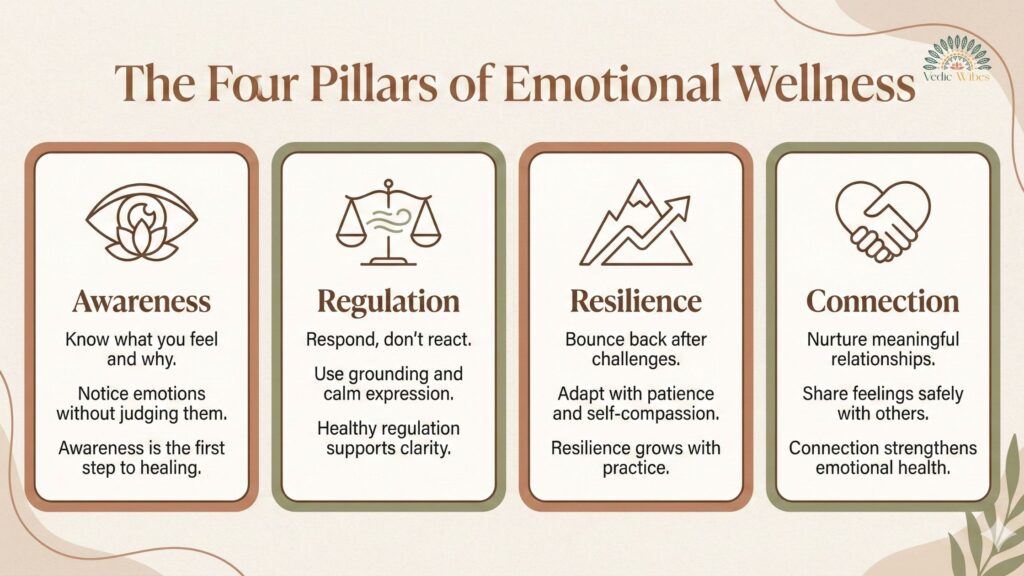
Awareness
Being aware means tuning into what you feel — noticing not just “what emotion” but also when, why, and how it arises. This includes acknowledging both pleasant and unpleasant emotions without judgment.
Regulation
Regulation means having healthy ways to respond to emotions. It doesn’t mean suppressing them or “always being positive,” but rather responding in a way that is constructive — whether that means processing, expressing, or gently calming emotions.
Research shows that the ability to regulate emotions — both negative and positive — is strongly linked to better mental and physical health, life satisfaction, and resilience.
Resilience
Resilience is about bouncing back. It’s developing the capacity to navigate challenges, setbacks, disappointments or losses with strength, adaptability, and hope — without being derailed by them.
Connection
Humans are social beings. Emotional wellness thrives when we have meaningful relationships and connections — people we trust, who support us, with whom we can share feelings and experiences. This builds empathy, a sense of belonging, and mutual emotional support.
Simple Practices to Build Emotional Wellness
You don’t need dramatic life changes to support emotional health. Small, consistent habits can go a long way.
Daily check-in ritual
At a convenient time each day (morning or evening), take a moment to mentally check in — ask yourself: How am I feeling right now? What triggered these feelings? Just noticing — without judging — helps build self-awareness and prevent emotional overload.
Five-minute grounding
When emotions run high — stress, anger, sadness — use a short grounding or mindfulness exercise: take 5 deep breaths, feel your feet on the floor, pay attention to your surroundings, or simply pause and notice your bodily sensations. This can help you calm down and avoid reactive behavior.
Gentle lifestyle shifts
- Prioritise sleep, good nutrition, and some physical activity — your body and mind are tightly connected.
- Make time for meaningful connection — talk to friends or family, share how you feel, listen to others. Emotional wellness improves when you nurture social bonds.
- Engage in small acts of self-compassion: allow yourself downtime, reflect on things you’re grateful for, forgive yourself for mistakes instead of dwelling on them.
When to Seek More Support
Sometimes, self-care and small practices may not be enough. It’s important to recognise when to reach out for additional support.
Listening to internal cues
If you notice persistent negative mental or physical symptoms — chronic anxiety, depression, ongoing fatigue, frequent mood swings, social withdrawal, or inability to perform daily tasks — these are internal signals that emotional distress may be deepening.
If you find yourself overwhelmed often, unable to manage emotions using your usual coping strategies, or feeling stuck, it could be time for more help.
How to ask for help
- Start by talking to someone you trust — a friend, family member, or mentor. Sometimes just sharing what you feel can relieve a burden.
- If emotional distress persists, consider seeking assistance from a mental health professional (counsellor, therapist). Professionals can offer safe space, tools, and guidance to navigate challenging emotions.
- Remember: asking for help is a sign of strength, not weakness. Emotional wellness is a skill and a practice — sometimes we all need support to nurture it.
In Conclusion
Emotional wellness is not a luxury — it’s a foundational pillar of holistic wellbeing. By understanding and nurturing our emotional selves through awareness, regulation, connection, resilience, and gentle daily practices, we build a life that’s more balanced, meaningful, and fulfilling.
As commitments and pressures grow over time, emotional wellness helps us navigate change with grace, maintain our health, and cultivate deeper relationships. It doesn’t mean we must avoid hard feelings — but that we can meet them, process them, and grow from them.
Even small, consistent steps — a daily check-in, mindful breathing, wholesome lifestyle choices — can yield big results. And when challenges become tough, reaching out for support is a courageous and wise choice.
About The Author

Ishita Sengupta
Ishita Sengupta is a wellness educator and founder of Vedicwibes. She shares practical Ayurvedic tips and mindful living strategies for people looking to live healthier, balanced lives. Her approach blends ancient wisdom with modern practicality, making wellness simple, effective, and enjoyable.
- Ishita Sengupta

- Ishita Sengupta

- Ishita Sengupta