

Table of Contents
ToggleAbhyanga - Full Body Massage: Home Routine & Benefits
Learn Abhyanga (Full-Body Massage) at home: step-by-step guide, benefits, best oils, and tips for glowing skin, stress relief & better sleep. |
The Ancient Art of Daily Self-Massage
The forgotten morning ritual that keeps your body young and calm
Do you remember the last time you truly felt at ease in your own body?
Not just relaxed after a spa day — but deeply at home within your own skin?
In our modern rush of screens, schedules, and sleeplessness, the body often becomes an afterthought. We treat it like a machine that must keep going, forgetting it is the very vessel of our peace. But thousands of years ago, Ayurveda — India’s timeless science of life — offered a beautiful antidote: Abhyanga, the Ayurvedic full-body oil massage that nourishes the skin, calms the nerves, and brings the mind back home to the body.
Abhyanga isn’t a luxury. It’s a form of Ayurvedic self-care — a daily ritual that gently reconnects you with yourself through the simple act of touch. In ancient times, people began their mornings not with caffeine, but with warm oil massage, believing that oiling the body daily could prevent disease, delay aging, and invite longevity.
In Sanskrit, Abhyanga means “to anoint” or “to lovingly apply oil.” It’s an act of self-respect — a daily conversation between your hands and your body. When warm Abhyanga oil flows over the skin, it improves circulation, stimulates lymphatic flow, and helps release stored tension. It’s the ultimate detox through massage, without any fancy tools or supplements.
In this guide, you’ll discover:
What exactly Abhyanga is and how it works according to Ayurveda
Step-by-step guidance on how to do Abhyanga at home
The proven Abhyanga massage benefits — for your body, mind, and emotions
How to choose the best oils for Abhyanga based on your dosha
When and how often to practice this ritual for maximum results
And how this simple daily body massage routine can help with dry skin, stress, and sleep
By the end of this article, you’ll not only understand the science behind this Ayurvedic body massage, but also feel inspired to bring it back into your mornings — as a slow, sacred start to your day.
So, find a quiet corner, warm your oil, and let’s rediscover the forgotten language of touch — the one your body has been waiting to speak.
What Is Abhyanga?
Abhyanga is an Ayurvedic self-massage using warm herbal oil applied over the entire body to nourish the skin, balance the doshas, and promote overall health.
Imagine starting your day not with a hurried shower and a checklist, but with a few quiet minutes of warmth, oil, and stillness. That’s Abhyanga — the Ayurvedic full-body massage that has been practiced for thousands of years to nurture both body and mind.
In the ancient language of Sanskrit, Abhyanga literally means “to anoint” or “to apply oil to the body.” But this translation barely scratches the surface. In Ayurveda, Abhyanga is considered a daily act of self-love — an essential part of Dinacharya, the morning routine meant to maintain balance, vitality, and mental calm.
Unlike modern massages that focus only on muscles or relaxation, Abhyanga is a therapeutic ritual that works at multiple levels. It lubricates joints, improves lymphatic flow, and helps remove toxins from the body — what Ayurveda calls ama. The gentle, rhythmic strokes stimulate the skin and nerve endings, grounding your energy while enhancing circulation and glow.
According to classical Ayurvedic texts like the Ashtanga Hridayam, daily oil massage helps slow the aging process, strengthens the immune system, and enhances clarity of mind. It’s said to “bestow longevity, good sleep, and healthy skin.”
In simple terms, Abhyanga is the bridge between your body and your inner calm. It’s your opportunity to pause, touch, and listen to yourself. Whether you do it for five minutes or twenty, this ritual reminds you that your body is not a burden to be managed — it’s a home to be cared for.
When warm Abhyanga oil glides over your skin, something shifts. The dryness softens. The mind quiets. You begin to feel grounded, not scattered. That’s the subtle power of this ancient Ayurvedic self-care — it nourishes you from the outside in and the inside out.
Why Abhyanga Matters: Benefits Backed by Ancient Texts and Modern Wellness
It’s easy to think of Abhyanga (Full Body Massage) as a simple self-care ritual — something nice to do on weekends.
But in Ayurveda, Abhyanga is so much more. It’s a daily practice for sustaining life, energy, and balance.
The ancient texts describe oiling the body as a way to protect it — the same way a mother protects her child. The act of touch, the warmth of oil, and the rhythm of your hands work together to restore harmony where modern living often brings imbalance.
Ashtanga Hridaya Sutrasthana :
Abhyangam aacharet nityam sa jaraa shramavaataha | Drushti prasaada pushti aayu susvapna twak daardhyakru||
“One who performs daily Abhyanga (oil massage) is protected from aging, fatigue, and Vata imbalance. It improves eyesight, nourishes the body, promotes longevity, ensures restful sleep, and keeps the skin soft and healthy.”
The Ashtanga Hridayam — one of Ayurveda’s foundational texts — beautifully summarizes the essence of this practice:
This verse reflects what modern wellness science is now beginning to rediscover — that gentle self-massage with warm oil has far-reaching effects on both the nervous and circulatory systems, helping the body and mind find their natural rhythm again.
1. Physical Benefits of Abhyanga
Regular Ayurvedic body massage nourishes the body at every level. Here’s how:
- Enhances Circulation: The rhythmic strokes of Abhyanga stimulate lymphatic flow, improving oxygen supply and detoxification. It’s like giving your body a gentle internal cleanse every morning.
- Improves Skin Health and Glow: Warm Abhyanga oil seeps deep into the skin layers, locking in moisture and improving texture. It strengthens the skin barrier and delays signs of aging — a natural alternative to chemical moisturizers.
- Increases Joint Flexibility: The lubrication from oiling the joints enhances movement, reduces stiffness, and supports overall joint health — especially beneficial for those with Vata imbalance (dryness, cracking, joint pain).
- Supports Detoxification: The mild sweating and improved circulation after oil massage aid in flushing out toxins (ama), making it a gentle, daily detox ritual.
2. Mental and Emotional Benefits
Abhyanga doesn’t just calm the skin — it calms you.
- Grounds the Mind: The soothing, repetitive motions of self-massage with oil signal safety to the nervous system, pulling you out of fight-or-flight mode.
- Reduces Stress and Anxiety: The warmth of oil activates the parasympathetic nervous system, lowering cortisol levels and easing emotional fatigue.
- Improves Sleep Quality: Practicing Abhyanga before bedtime or massaging the feet with oil can significantly enhance deep sleep and relaxation.
- Increases Self-Connection: Touching your own body with care builds emotional resilience and restores a sense of inner security that modern life often disrupts.
In a world where we’re constantly overstimulated, Abhyanga serves as a reminder — stillness can heal.
3. Dosha-Specific Effects (Especially for Calming Vata)
According to Ayurveda, Vata dosha — governed by air and space — is the first to go out of balance in our fast-paced lives. When Vata rises, it causes dryness, restlessness, poor sleep, and anxiety.
Abhyanga is the ultimate Vata-balancing ritual.
The warm, oily, and rhythmic nature of this massage directly counteracts Vata’s cold, dry, and erratic qualities.
- For Vata types: Use warm sesame oil or Ashwagandha oil for deep nourishment.
- For Pitta types: Choose cooling oils like coconut or sunflower.
- For Kapha types: Stimulating oils like mustard or eucalyptus work best.
This dosha-specific approach ensures your daily body massage routine does more than pamper — it harmonizes your unique constitution.
4. Modern Wellness Backing
Modern studies echo what Ayurveda has said for centuries:
- Regular oil massage improves blood flow, boosts immunity, and lowers stress hormones.
- Massage therapy is shown to enhance lymphatic drainage, reduce muscle tension, and improve sleep quality — aligning perfectly with Ayurvedic claims.
- The warmth and touch stimulate oxytocin release, known as the “love hormone,” promoting emotional balance and self-compassion.
In essence, Abhyanga blends ancient science and modern physiology into one timeless act of care.
Choosing the Right Oil for Abhyanga
The best oil for Abhyanga depends on your dosha.
Sesame oil for Vata
Coconut oil for Pitta
Mustard oil for Kapha
Always use warm oil for best results
One of the most beautiful aspects of Abhyanga (Full Body Massage) is that it’s never one-size-fits-all.
Ayurveda teaches that your oil should suit your dosha — your unique body-mind type — and even adapt to the season. The right oil doesn’t just soften your skin; it balances your energy, calms your mind, and restores your natural rhythm.
Why the Oil You Choose Matters
In Ayurveda, oils are more than moisturizers — they’re carriers of energy and healing.
When applied warm, they penetrate deep into the tissues (dhatus), nourishing the body and supporting lymphatic flow and detox through massage. Each oil has its own guna (qualities) — some are warming and grounding, others are cooling and soothing.
A mismatched oil can feel heavy or irritating; the right one feels like your body’s natural extension.
Dosha-Specific Oil Guide for Abhyanga
Here’s how to choose the best oils for Abhyanga, based on your constitution and current imbalances.
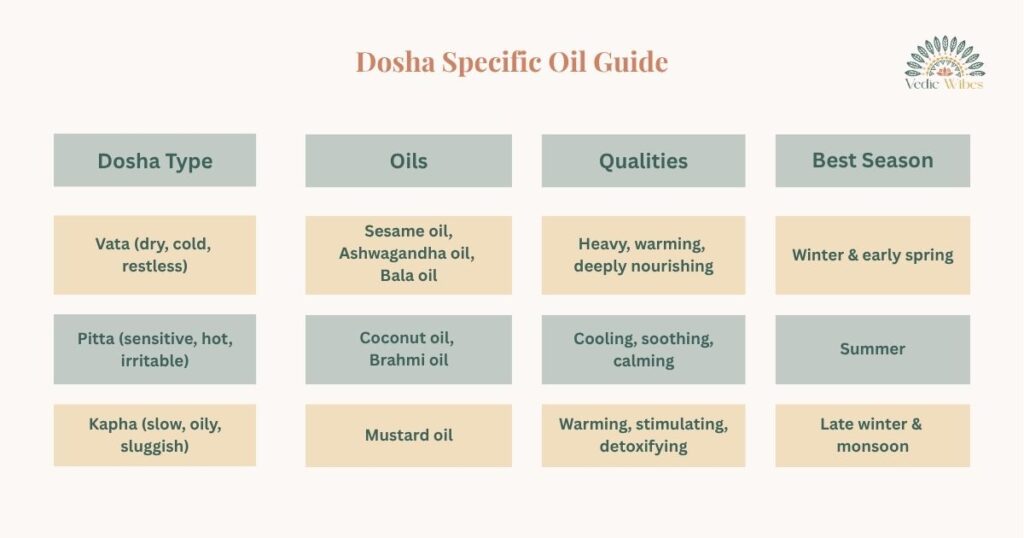
If you’re not sure of your dosha, a gentle sesame oil works beautifully for most body types. It’s grounding, anti-aging, and packed with natural antioxidants.
Seasonal Tip:
- During summer, switch to coconut oil for a cooling effect.
- In winter, use heavier oils like sesame or ashwagandha to combat dryness and stiffness.
- During the monsoon, stimulating oils like mustard help prevent sluggishness and joint heaviness.
How to Warm Your Oil
Always warm your Abhyanga oil before applying — this step is crucial. Cold oil can shock the body, while warm oil enhances absorption and relaxation.You can gently heat it by placing the oil bottle in a bowl of hot water for a few minutes. Test the temperature on your wrist before applying.
When to Use Infused or Medicated Oils
For targeted benefits, you can use herbal-infused Abhyanga oils:
- Bala-Ashwagandha oil – for muscle strength and fatigue
- Brahmi oil – for calming the mind and improving sleep
- Triphala oil – for detox and improving skin tone
- Ksheerabala oil – for joint stiffness and nerve health
These oils combine traditional herbs with base oils to create a specific healing effect — the perfect bridge between beauty and medicine.
Pro Tip from Ayurveda:
“Use oil as your first nourishment, not your last remedy.”
Even a five-minute self-massage before your morning shower can have long-term effects on your circulation, glow, and emotional balance.
Your choice of oil becomes your personal medicine — a quiet way of tuning in to what your body truly needs each day.
About The Author

Ishita Sengupta
Ishita Sengupta is a wellness educator and founder of Vedicwibes. She shares practical Ayurvedic tips and mindful living strategies for people looking to live healthier, balanced lives. Her approach blends ancient wisdom with modern practicality, making wellness simple, effective, and enjoyable.
- Ishita Senguptahttps://vedicwibes.com/author/consultishitahahgmail-com/
 September 28, 2025
 - Ishita Senguptahttps://vedicwibes.com/author/consultishitahahgmail-com/
 September 20, 2025
 - Ishita Senguptahttps://vedicwibes.com/author/consultishitahahgmail-com/
 September 9, 2025
 - Ishita Senguptahttps://vedicwibes.com/author/consultishitahahgmail-com/
 September 3, 2025