
Ayurvedic morning rituals explained through Dinacharya -Ayurvedic morning routine for balance, good health, and Vata, Pitta & Kapha harmony.
Table of Contents
ToggleAyurvedic Morning Rituals: A Grounded Way to Begin the Day
In Ayurveda, how you begin your morning quietly shapes how your body digests food, how your mind responds to stress, and how your energy unfolds through the day. This is why the tradition places great importance on Ayurvedic morning rituals, collectively known as Dinacharya.
The word Dinacharya comes from two Sanskrit roots: Dina (day) and Acharya (to follow). Together, they describe a daily routine designed to preserve health rather than treat disease. This concept is described in detail in classical texts such as the Ashtanga Hridayam and the Charaka Samhita, which emphasize routine as one of the strongest pillars of preventive health.
Unlike rigid schedules, the Ayurvedic morning routine is rhythmic. It works with natural biological cycles, digestion, elimination, and mental clarity. Over time, this rhythm helps the body maintain balance without force.
What Is Dinacharya in Ayurveda?
Ayurvedic daily routine (Dinacharya) refers to a sequence of daily practices recommended to support digestion, metabolism, sensory clarity, and emotional steadiness. These practices are outlined in Ashtanga Hridayam, Sutrasthana, Chapter 2, which explains that daily habits have a cumulative effect on long-term vitality and longevity
The Dinacharya morning routine focuses primarily on:
- Clearing waste from the body
- Awakening digestion gently
- Calming the nervous system
- Preparing the mind for the day ahead
Ayurveda views disease as a gradual loss of balance. Dinacharya is meant to slow or prevent this drift by repeating small, supportive actions every day.
Why Mornings Matter in Ayurveda
Ayurveda divides the day into biological phases governed by the doshas:
- Vata time: 2 a.m. – 6 a.m.
- Kapha time: 6 a.m. – 10 a.m.
- Pitta time: 10 a.m. – 2 p.m.
Waking during early Vata time is traditionally recommended because the mind is lighter, elimination is easier, and mental clarity is naturally higher
Modern research on circadian rhythms supports this idea, showing that early morning cortisol rhythms are associated with alertness and metabolic regulation
Ayurvedic Cleansing Rituals in the Morning
Cleansing in Ayurveda does not mean aggressive detoxification. It means removing what the body naturally wants to release.
1. Attending to Natural Urges
Ayurveda strongly warns against suppressing bowel and bladder urges. The Charaka Samhita lists suppression of natural urges as a direct cause of disease.Morning elimination helps clear Ama (metabolic waste) that accumulates overnight.
2. Drinking Warm Water
Drinking warm water after waking is described in Ayurveda as Ushnodaka. It gently stimulates digestion and supports bowel movement.Modern studies show that warm water can improve gastrointestinal motility compared to cold water
3. Tongue Scraping (Jihva Nirlekhana)
Tongue scraping is recommended to remove Ama from the tongue and improve taste perception. The practice is directly mentioned in Ashtanga Hridayam.Clinical studies show tongue scraping reduces oral bacteria linked to bad breath
4. Oil Pulling (Gandusha / Kavala)
Oil pulling is described in classical texts as a method to support oral health. Sesame or coconut oil is traditionally used.Modern research suggests oil pulling may reduce plaque and improve gum health when practiced regularly
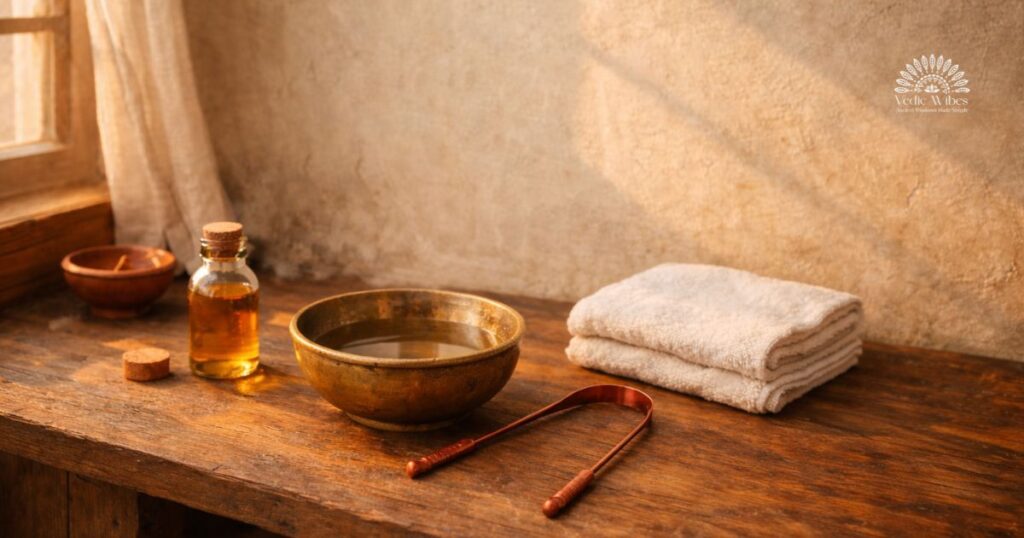
Abhyanga: The Heart of the Ayurvedic Morning Routine
Abhyanga, or self-oil massage, is one of the most emphasized practices in Ayurvedic morning rituals. According to Ashtanga Hridayam, daily oil massage:
- Nourishes the skin
- Calms the nervous system
- Supports joint health
- Balances Vata dosha
Modern studies on massage therapy show reductions in stress hormones and improvements in circulation
Movement, Breath, and Stillness
Gentle Movement
Ayurveda encourages mild movement in the morning to stimulate circulation without exhaustion. Yoga postures are traditionally integrated for this purpose.
Pranayama
Breathing practices are used to regulate the nervous system. Research on pranayama shows improvements in heart rate variability and stress resilience
Meditation
Morning meditation supports emotional balance and cognitive clarity. Mindfulness research confirms its role in stress reduction and mental well-being
Ayurvedic Morning Routine for Vata, Pitta, and Kapha
Ayurveda emphasizes customization. The Ayurvedic morning routine for Vata, Pitta, and Kapha differs slightly:
- Vata benefits from warmth, oil massage, and slower pacing
- Pitta benefits from cooling, moderation, and calm breathing
- Kapha benefits from earlier waking, dry brushing, and more movement
This dosha-based approach is described in classical Ayurvedic frameworks governing daily cycles
Benefits of Dinacharya
The benefits of Dinacharya described in classical texts include:
- Improved digestion and elimination
- Stable energy levels
- Stronger immunity
- Mental clarity
- Slower age-related decline
From a modern lens, consistency in daily routines is associated with improved metabolic health and stress regulation.
Simple Ayurvedic Morning Routine for Beginners
For those new to Ayurveda, simplicity matters. A simple Ayurvedic morning routine for beginners may include:
- Waking at a consistent time
- Drinking warm water
- Tongue scraping
- Gentle stretching
- Five minutes of quiet breathing
Ayurveda consistently advises starting small and building gradually, rather than forcing perfection.
Ayurvedic Morning Routine for Good Health and Balance
Ultimately, the Ayurvedic morning routine for good health is not about discipline alone. It is about rhythm. The Ayurvedic morning routine for balance works because it aligns the body with natural cycles rather than resisting them.
As stated in Ayurvedic texts, health is maintained not by occasional effort, but by daily alignment with nature.
Explore More Morning Rituals
If you’d like to go deeper into individual practices, these supporting articles explore each part of the Ayurvedic morning rituals in a focused, easy-to-understand way:
Why Morning Routines Matter in Ayurveda (Dinacharya Explained)
Understand how Dinacharya supports digestion, immunity, and long-term balance through daily rhythm.
The Best Time to Wake Up According to Ayurveda
Learn how Ayurvedic time cycles influence energy, elimination, and mental clarity in the morning.
Morning Tongue Cleaning: Benefits and How to Do It Right
Discover why tongue scraping is recommended in Ayurveda and how it supports oral and digestive health.
Drinking Warm Water in the Morning: Ayurvedic Perspective
Explore how warm water gently activates digestion and supports natural cleansing processes.
Morning Oil Pulling: Does It Really Help?
A balanced look at oil pulling, its traditional roots, and what modern research suggests.
Abhyanga (Self-Oil Massage): A Morning Ritual for Joint Health
Learn how daily oil massage supports joints, skin nourishment, and nervous system balance.
Morning Elimination in Ayurveda: Why Suppressing Urges Harms Digestion
Understand the Ayurvedic view on natural urges and their role in digestive and metabolic health.
Best Morning Breathing Practices for Calm Energy
Explore simple breathing techniques that help regulate the nervous system and focus the mind.
Morning Bathing Rituals in Ayurveda: More Than Just Hygiene
Learn why bathing is considered a therapeutic practice, not just a cleansing one, in Ayurveda.
How to Create a Simple Ayurvedic Morning Routine You Can Stick To
A practical guide to building a realistic routine that fits modern life while honoring Ayurvedic principles.
Ayurvedic morning rituals are not meant to complicate life. They are meant to steady it. Practiced gently and consistently, Dinacharya becomes less of a routine and more of a quiet anchor for daily living.
About The Author

Ishita Sengupta
Ishita Sengupta is a wellness educator and founder of Vedicwibes. She shares practical Ayurvedic tips and mindful living strategies for people looking to live healthier, balanced lives. Her approach blends ancient wisdom with modern practicality, making wellness simple, effective, and enjoyable.
- Ishita Senguptahttps://vedicwibes.com/author/consultishitahahgmail-com/
 September 28, 2025
 - Ishita Senguptahttps://vedicwibes.com/author/consultishitahahgmail-com/
 September 20, 2025
 - Ishita Senguptahttps://vedicwibes.com/author/consultishitahahgmail-com/
 September 9, 2025
 - Ishita Senguptahttps://vedicwibes.com/author/consultishitahahgmail-com/
 September 3, 2025