
Table of Contents
ToggleBreath Meditation: A Gentle Guide to Calm Your Mind and Nourish Your Life Force
Discover a simple breath meditation guide for calm, clarity, and daily balance. Learn benefits, techniques, and beginner steps for peaceful breathing.
If you’re in your 40s or 50s and looking for something simple, grounding, and deeply healing… breath meditation might be the most accessible doorway you’ll ever find.
No apps. No complex rituals. No equipment.
Just you. Your breath. And a little space to pause.
Let’s walk through this together — gently, slowly, in a way that feels human and doable.
What Breath Meditation Really Is
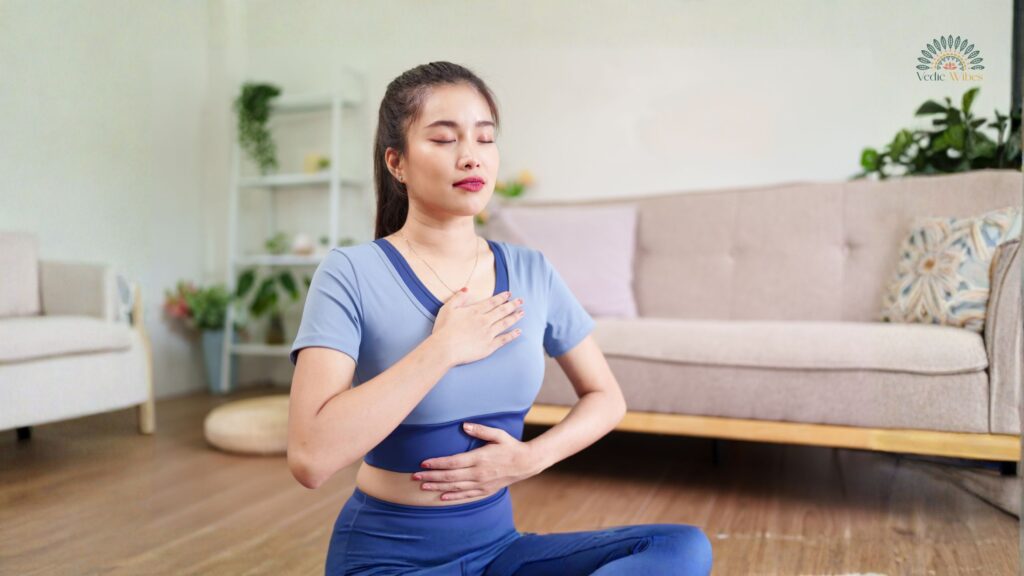
At its heart, breath meditation is the practice of watching your breath with kindness. Not forcing it. Not shaping it into something dramatic. Just observing the natural rhythm that’s already carrying you through life.
In yoga and Ayurveda, breath is the carrier of prāṇa — the subtle life force.
A classical verse from Ashtanga Hridayam describes the role of breath beautifully:
“Prāṇo vāyuḥ śarīrasya prāṇabhūto hi kevalaḥ.”
— Ashtanga Hridayam, Sutrasthana, 12
“Prāṇa (vital breath) alone sustains the life of the body.”
So when you meditate on breath, you’re not only calming the mind — you’re strengthening the very force that keeps you alive.
That’s why breath meditation feels so immediate. So real. So stabilizing.
Why Breath Meditation Helps — Backed by Research
You’ll often hear people say breath meditation “relaxes you.” That’s true — but it’s also incomplete. There’s solid research now explaining how and why this works.
Here’s what science confirms:
- Breathwork reduces stress and anxiety in adults, according to controlled trials (2023 meta-analysis).
- Slow, steady breathing activates the parasympathetic nervous system, shifting you from tension to ease.
- Regular breath meditation improves emotional balance and reduces reactivity.
- It can help lower heart rate and support healthier heart rhythm patterns.
- Mindful breathing enhances cognitive clarity and attention.
In short: when your breath slows, your whole inner system follows.
A Small Story: The Evening Everything Softened
A reader once wrote to me saying she started breath meditation during a tough phase. Work pressure. Parents’ health concerns. Sleepless nights.
One evening, she sat in her bedroom, hands on her belly, letting herself breathe in for four seconds and out for six. After five rounds, she noticed her shoulders drop. Her jaw loosen. Her mind become a shade quieter.
She told me, “It wasn’t a miracle. It was more like someone dimmed the harsh lights in my head.”
That’s breath meditation — small changes, steady shifts, a deeper sense of homecoming.
How to Start Breath Meditation (Beginner-Friendly)
Here’s the simplest way to begin, especially if you’ve never meditated before:
- Sit comfortably. A chair, sofa, bed — it doesn’t matter.
- Close your eyes if it feels comfortable.
- Notice your natural breath. Let it be exactly as it is.
- Use a gentle rhythm:
- Inhale for 4, exhale for 6
- Or equal breathing: inhale 4, exhale 4
- Or even 5 slow breaths per minute
- If your mind wanders (it will), bring it back. Kindly. Without scolding yourself.
- End with a small moment of gratitude.
Five minutes is enough. Truly.
Over time, that five minutes becomes a refuge.
Types of Breath Meditation
Breath Awareness Meditation
The simplest form. Sit. Breathe. Notice. This is the foundation of all breath meditation.
Structured Ratio Breathing
Patterns like 4-6, 4-7-8, 5-5, or 5 breaths a minute.
Mindful Breathing
Here, you bring attention to sensations — the coolness of the inhale, the warmth of the exhale, the expansion of your belly.
Nadi Shodhana (Alternate Nostril Breathing)
A classic calming technique. Helps balance both sides of the nervous system. Very gentle and excellent for beginners when done slowly.
Popular Breathing Methods Explained Simply
You don’t need all of them. Just choose one or two you enjoy.
5 Breaths per Minute (Coherent Breathing)
Slow breathing with no strain. Excellent for emotional balance.
6-Minute Breathing Meditation
A short guided rhythm — enough to shift your whole nervous system.
333, 444, 555, 478, 888 & other patterned methods
These are just number ratios to help beginners keep a rhythm.
Some help relaxation, some increase focus, some reduce anxiety.
The best method?
The one that feels good in your body.
4-7-8 Breathing
Inhale 4 → Hold 7 → Exhale 8.
Good for calming the mind before bedtime.
4-4-4-4 (Box Breathing)
Inhale → Hold → Exhale → Hold.
Useful for focus and grounding.
Benefits You Will Actually Feel
- Lower stress
- Calmer nerves
- Softer emotional edges
- Clearer thinking
- Improved sleep
- A grounded, centered presence
- Better resilience to daily challenges
Nothing dramatic. Just steadier. Softer. More you.
Risks in Breath Meditation
Breath meditation is generally safe.
But:
- If you have asthma or heart issues, avoid very long breath holds.
- If you feel dizzy, always stop and return to normal breathing.
- If emotions feel overwhelming, slow down or take a break.
Gentleness over intensity. Always.
How Often Should You Practice?
Even 5 minutes a day is more than enough.
If you want deeper results, try:
- 5 minutes in the morning
- 5 minutes at night
Consistency beats duration.
How to Build a Daily Habit
- Link breath meditation to another habit, like brushing your teeth.
- Keep your practice simple.
- Don’t wait for the “perfect” quiet moment — they rarely come.
- Reflect once a week: How do I feel after breathing?
These tiny steps create a lifelong practice.
A Gentle Closing Thought
Breath meditation isn’t about achieving something.
It’s about returning — to your body, your calm, your inner clarity.
You don’t need special clothes or special skills.
Just a willingness to pause and breathe.
Before you go…
Just try one round.
Sit back. Close your eyes. Inhale softly. Exhale even softer. Notice how your body responds.
If it feels good, make this your little daily ritual — two minutes in the morning, two minutes at night. Small, steady steps.
And if you’d like more simple, age-old practices like this, you’re always welcome to explore the other breathwork and wellness guides on my site. Take what supports you. Leave the rest.
About The Author

Ishita Sengupta
Ishita Sengupta is a wellness educator and founder of Vedicwibes. She shares practical Ayurvedic tips and mindful living strategies for people looking to live healthier, balanced lives. Her approach blends ancient wisdom with modern practicality, making wellness simple, effective, and enjoyable.
- Ishita Senguptahttps://vedicwibes.com/author/consultishitahahgmail-com/
 September 28, 2025
 - Ishita Senguptahttps://vedicwibes.com/author/consultishitahahgmail-com/
 September 20, 2025
 - Ishita Senguptahttps://vedicwibes.com/author/consultishitahahgmail-com/
 September 9, 2025
 - Ishita Senguptahttps://vedicwibes.com/author/consultishitahahgmail-com/
 September 3, 2025