

Ayurvedic Breakfast Options Made Simple | Vedicwibes
Ayurvedic Breakfast Options: What to Eat in the Morning According to Ayurveda Learn what to eat in the morning according […]
Ayurvedic Breakfast Options Made Simple | Vedicwibes Read Post »
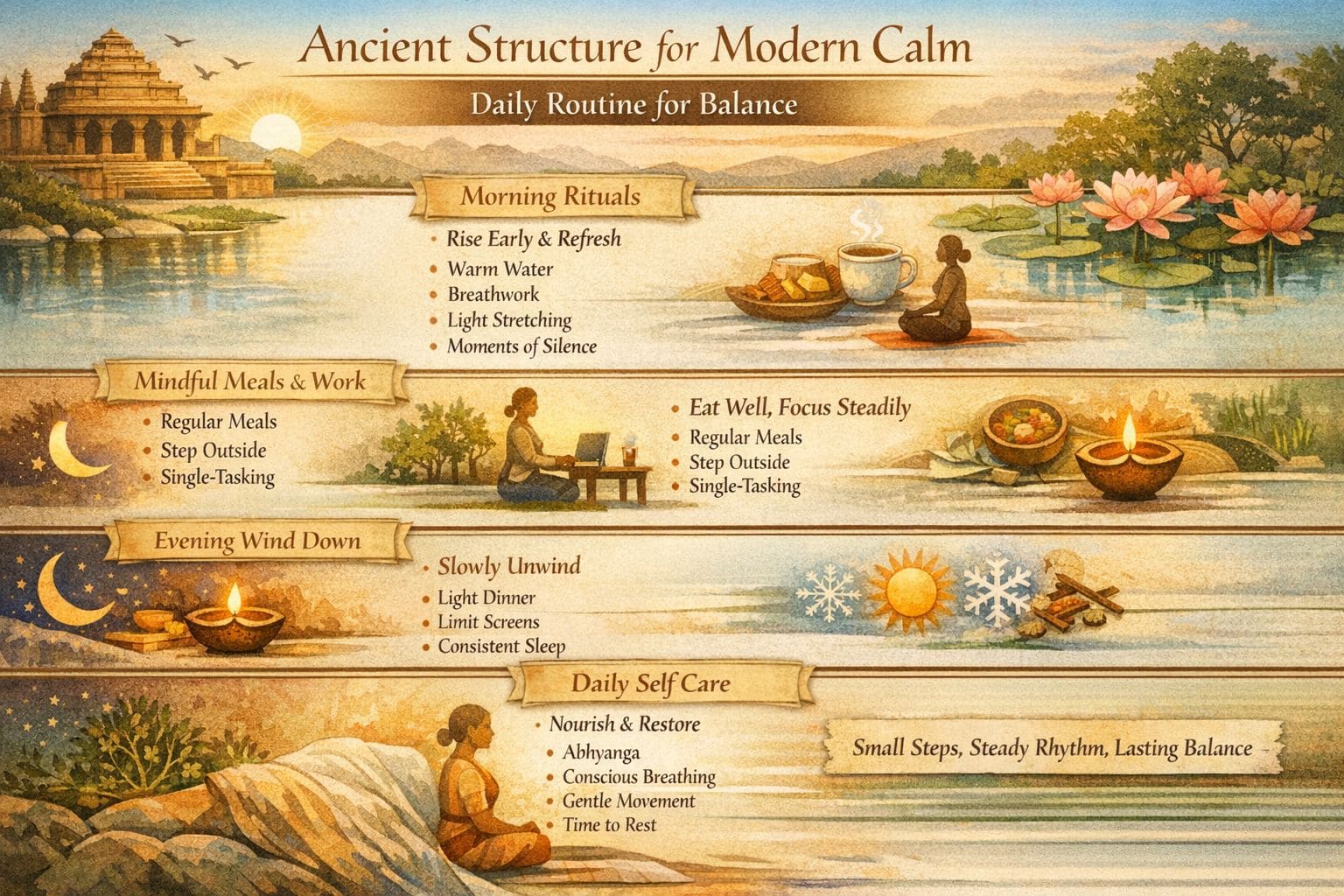
What is a daily routine according to Ayurveda?
In Ayurveda, a daily routine—known as Dinacharya—is a structured rhythm of simple habits aligned with nature’s cycles. It includes morning rituals, mindful meals, steady work periods, evening wind-down practices, and seasonal adjustments that support energy, digestion, and mental clarity without extremes.
A steady daily routine reduces friction. You wake at a similar time. You eat at regular hours. You wind down before sleep. These small anchors calm the nervous system and support circadian rhythm alignment.
In classical texts, Dinacharya is described as the foundation of long-term balance. When the day has structure, digestion improves. Sleep becomes deeper. Mood stabilizes. You feel less scattered.
For adults in their 40s, 50s, and beyond, this matters even more. Hormones shift. Sleep becomes lighter. Stress accumulates. A grounded daily routine offers something steady when life feels busy.
Think of it this way:
You do not need a perfect schedule. You need a predictable one.
Morning sets the tone for the entire day.
In an Ayurvedic daily routine, the early hours are quiet and clear. This is when the mind is most receptive. Simple morning rituals help you move from sleep into steady awareness.
A gentle start may include:
These habits prepare digestion and reduce mental rush.
If you want a step-by-step guide, explore our detailed guide to
/daily-routine/morning-rituals/
Even small changes matter. Checking your phone first thing disrupts natural rhythm. Rushing breakfast stresses digestion. A calm beginning protects your energy for the rest of the day.
Most people focus on mornings. Few protect their evenings.
Yet sleep quality determines how tomorrow feels.
An effective evening routine gently reduces stimulation. Lights dim. Screens reduce. Meals are lighter and earlier. Conversations slow down.
In Ayurveda, nighttime is when repair happens. If the mind remains overstimulated, rest becomes shallow.
A practical evening structure may include:
You can explore a structured wind-down plan here:
/daily-routine/evening-night-routine/
The goal is not perfection. It is rhythm.
Detox does not mean extreme cleanses.
In an Ayurvedic daily routine, detox is gentle and ongoing. The body eliminates waste naturally when digestion is steady.
Daily detox tips include:
When digestion—Agni—is balanced, toxins (known as Ama) do not accumulate easily.
Simple daily detox practices are explained in detail here:
/daily-routine/daily-detox/
These are not medical treatments. They are supportive habits. Over time, consistency matters more than intensity.
An effective daily routine adapts to seasons.
Ayurveda teaches that your body responds to climate shifts. Summer requires cooling habits. Winter calls for warmth and nourishment. Monsoon demands digestive care.
Ignoring seasons creates imbalance. Adjusting gently restores harmony.
Examples of seasonal practices:
You can explore these adjustments here:
/daily-routine/seasonal-practices/
Seasonal awareness keeps your routine flexible, not rigid.
Without self care habits, a daily routine becomes mechanical.
Self care in Ayurveda is not luxury. It is maintenance.
It includes:
These habits protect your nervous system. They stabilize mood. They build resilience quietly.
Explore supportive self care habits here:
/daily-routine/self-care/
When self care is steady, everything else becomes easier.
If you prefer clarity, start here:
Morning
Day
Evening
Start with two habits. Then add slowly.
The ideal daily routine follows Dinacharya: waking early, cleansing, mindful eating, steady work, light evening meals, and consistent sleep. It aligns with natural circadian rhythms rather than modern overstimulation.
How long does it take to see benefits from a daily routine?
Many people notice improved sleep and steadier energy within 2–3 weeks of consistent habits. The key is regular timing, not intensity.
No. Start small. Choose 2–3 habits that feel sustainable. Build gradually. Consistency is more important than perfection.
A daily routine is not about strict control. It is about gentle rhythm.
Morning rituals create clarity.
Evening routines protect sleep.
Daily detox habits support digestion.
Seasonal practices maintain balance.
Self care habits anchor resilience.
When these elements work together, your days feel steadier.
You do not need dramatic change. Begin with one small shift this week. Notice how your body responds. Then build from there.
Explore each section above and begin shaping a daily routine that feels natural, practical, and deeply supportive.
Small steps. Steady rhythm. Lasting balance.
Ayurvedic Breakfast Options: What to Eat in the Morning According to Ayurveda Learn what to eat in the morning according […]
Ayurvedic Breakfast Options Made Simple | Vedicwibes Read Post »

Morning Breathing Practices: A Simple Guide for Beginners Gentle morning breathing practices for beginners. Learn simple techniques to feel calm,
Morning Breathing Practices: A Simple Guide for Beginners Read Post »

Should You Exercise in the Morning? Benefits, Risks, and the Right Way to Do It Should you exercise in the
Should You Exercise in the Morning A Beginner Friendly Guide Read Post »

Morning Detox Habits: Simple Daily Rituals That Support Natural Cleansing Morning detox habits often feel overwhelming. Learn simple ways to
Morning Detox Habits Beginners Can Follow Daily with Ease Read Post »

Best Time to Wake Up According to Ayurveda Learn the best time to wake up according to Ayurveda and simple
Best Time to Wake Up According to Ayurveda for Daily Balance Read Post »

Is Drinking Warm Water in the Morning Really Necessary? Is drinking warm water in the morning really necessary for your
Is Drinking Warm Water in the Morning Really Necessary Read Post »

Why Am I Still Tired After Sleeping? Why am I still tired after sleeping enough This guide explains common causes
Why Am I Still Tired After Sleeping a Full Night of Rest | Vedicwibes Read Post »

Ayurvedic Morning Routine for Modern Life Ayurvedic morning routine for beginners explained in simple steps. A gentle guide to healthy
Ayurvedic Morning Routine for Modern Life Read Post »

An Ayurvedic morning routine for beginners is a simple way to start your day with calm, clarity, and steady energy.
Ayurvedic Morning Routine for Beginners Read Post »

Ayurvedic morning rituals explained through Dinacharya -Ayurvedic morning routine for balance, good health, and Vata, Pitta & Kapha harmony. Ayurvedic
Ayurvedic Morning Rituals for Daily Balance and Vitality-Vedicwibes Read Post »