
Table of Contents
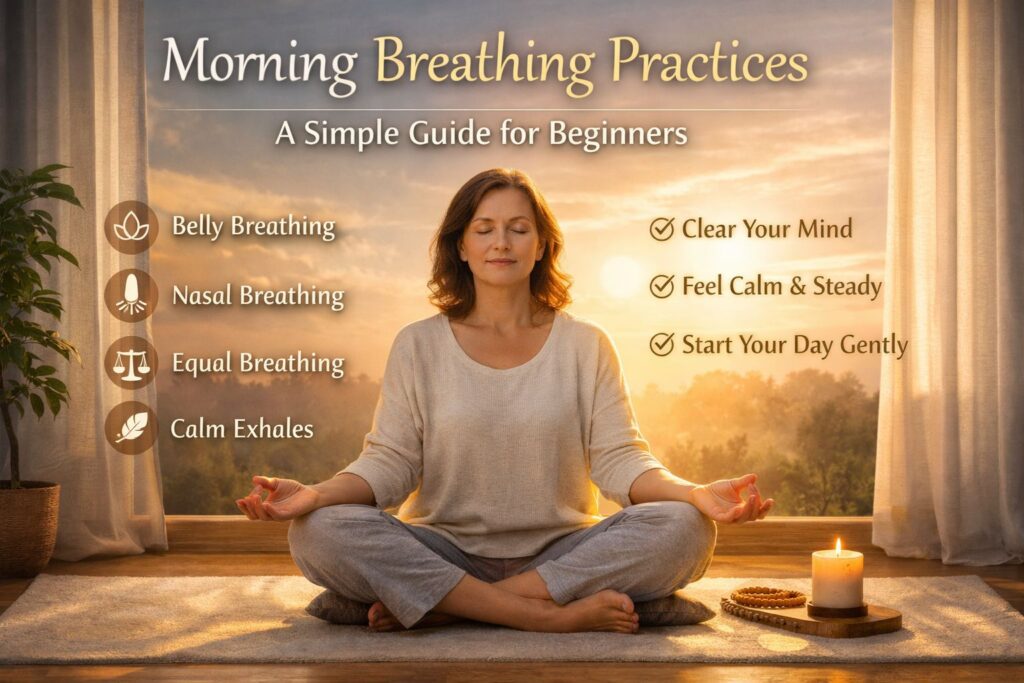
ToggleMorning Breathing Practices: A Simple Guide for Beginners
Gentle morning breathing practices for beginners. Learn simple techniques to feel calm, clear, and steady after waking up.
Morning breathing practices are gentle, intentional ways of breathing done soon after waking up to prepare the body and mind for the day. They help you feel calm, steady, and mentally clear without strain. For beginners, the focus is not on technique perfection, but on ease, awareness, and consistency.
If mornings feel rushed, heavy, or mentally cluttered, breathing practices offer a simple reset. No equipment. No flexibility. Just a few quiet minutes with your breath.
What Are Morning Breathing Practices?
Morning breathing practices are simple breathing techniques done after waking up to gently activate the body, calm the nervous system, and bring mental clarity.
They are usually practiced on an empty stomach, in a seated position, and take about 3 to 10 minutes. These practices are part of mindful morning rituals found in yoga and pranayama traditions, adapted for modern daily life.
Why Breathing in the Morning Matters
Breathing practices to start the day work because mornings are a natural transition period for the body and mind.
Morning breathing helps by:
- Shifting the body from rest to alertness
- Supporting nasal breathing in the morning
- Reducing mental agitation
- Creating a calm baseline before daily demands begin
For adults who wake up feeling tense, foggy, or rushed, gentle breathing provides a steady start.
Best Morning Breathing Practices for Beginners
The best morning breathing practices are slow, gentle, and easy to follow. They should never cause strain, breath holding, or dizziness.
Below are simple, beginner-friendly techniques commonly used in morning pranayama for beginners.
1. Belly Breathing (Diaphragmatic Breathing)
Belly breathing is the easiest and most accessible morning breathing exercise for beginners.
What it is:
Slow breathing where the belly rises on inhalation and falls on exhalation.
How to do it:
- Sit comfortably with your spine upright.
- Place one hand on your belly.
- Inhale gently through the nose and feel the belly expand.
- Exhale slowly and feel the belly soften.
- Continue for 1–3 minutes.
Why it works:
Belly breathing supports conscious breathing and helps calm the nervous system naturally.
Belly Breathing
2. Nasal Breathing Awareness
Nasal breathing in the morning is simple and effective.
What it is:
Observing the natural flow of breath through the nostrils without changing it.
How to do it:
- Sit quietly with eyes closed or softly open.
- Keep the mouth closed.
- Notice the air moving in and out of the nose.
- Breathe slowly and naturally.
- Practice for 2–5 minutes.
Why it works:
This builds breath awareness practice and prepares the mind for focus and clarity.
Nasal Breathing Awareness
3. Equal Breathing (Sama Vritti – Gentle Version)
This is a balanced breathing technique often used in simple breathing techniques in the morning.
What it is:
Inhaling and exhaling for the same length of time.
How to do it:
- Inhale through the nose for a count of 4.
- Exhale through the nose for a count of 4.
- Keep the breath smooth and unforced.
- Continue for 1–3 minutes.
Why it works:
Equal breathing promotes balance and steadiness without overstimulation.
Equal Breathing
4. Soft Extended Exhale Breathing
This technique places gentle emphasis on the exhale.
What it is:
Exhaling slightly longer than you inhale.
How to do it:
- Inhale through the nose for 4 counts.
- Exhale through the nose for 6 counts.
- Keep the breath soft and relaxed.
- Practice for 2–3 minutes.
Why it works:
Longer exhales help settle the mind and reduce early-morning restlessness.
Easy Breathing
What Breathing Should I Do First Thing in the Morning?
First thing in the morning, choose breathing that is gentle, nasal, and unforced.
Belly breathing or simple nasal breath awareness are ideal starting points. These practices help the body wake up gradually and bring mental calm without effort. Avoid fast or forceful breathing immediately after waking, especially if you feel stiff, anxious, or low on energy.
A Simple Daily Morning Breathing Routine (5–7 Minutes)
A daily morning breathing routine does not need to be long to be effective.
Beginner routine:
- Belly breathing – 2 minutes
- Nasal breathing awareness – 2 minutes
- Equal breathing or extended exhale – 1–3 minutes
This routine fits easily into busy mornings and supports gentle breathing exercises after waking up.
Short option (3 minutes):
- Belly breathing + nasal awareness
Longer option (7 minutes):
- Add extended exhale breathing at the end
How Long Should You Do Breathing Exercises in the Morning?
Most beginners benefit from 3 to 10 minutes of morning breathing exercises.
Start with 3–5 minutes and increase gradually if comfortable. Short, consistent practices are more effective than long, irregular sessions. Stop if you feel light-headed or strained.
Which Breathing Technique Is Good After Waking Up?
Gentle, nasal-based breathing techniques are best after waking up.
Belly breathing, nasal breath awareness, and equal breathing are commonly recommended because they ease the body into activity without overstimulation. These techniques support calmness and clarity during the early morning transition.
Should Breathing Be Deep or Gentle in the Morning?
Gentle breathing is usually better than deep or forceful breathing in the morning.
After waking up, the body is still adjusting from rest. Slow, soft breaths help stabilise energy and mood. Deep or forceful breathing may feel uncomfortable or unsettling for beginners early in the day.
How to Choose the Right Morning Breathing Practice
Use this simple guide to choose what suits you best:
- Feeling tired or heavy: Belly breathing
- Feeling anxious or rushed: Extended exhale breathing
- Feeling mentally scattered: Nasal breath awareness
- Want balance and steadiness: Equal breathing
There is no single “best” practice. The right choice depends on how you feel that morning.
Who Should Be Gentle or Cautious with Morning Breathing
Morning breathing practices are generally safe when done gently. However, extra care is helpful if you:
- Wake up feeling dizzy or light-headed
- Are new to breath awareness practices
- Feel rushed or stressed
- Tend to force or control the breath
In such cases, keep sessions short and natural. If discomfort appears, pause and return to normal breathing.
Common Mistakes to Avoid in Morning Breathing
Simple breathing techniques in the morning work best when kept easy.
Avoid:
- Mouth breathing
- Forcing the inhale or exhale
- Holding the breath unnecessarily
- Practicing on a full stomach
- Expecting immediate results
Morning breathing practices should feel calm, steady, and natural.
FAQ: Morning Breathing Practices
Gentle morning breathing practices for beginners. Learn simple techniques to feel calm, clear, and steady after waking up.
What are the best breathing practices to do in the morning?
The best morning breathing practices are gentle techniques like belly breathing, nasal breathing awareness, and equal breathing. These practices are easy for beginners, calming, and help the body wake up naturally without strain.
How long should you do breathing exercises in the morning?
Most people benefit from 3 to 10 minutes of breathing exercises in the morning. Even 3–5 minutes daily can be effective when practiced consistently and gently.
Which breathing technique is good after waking up?
Belly breathing, nasal breath awareness, and equal breathing are good techniques after waking up. They support relaxation and mental clarity without overstimulating the body.
Can breathing exercises be done on an empty stomach in the morning?
Yes, breathing exercises are best done on an empty stomach in the morning. Practicing before breakfast allows comfortable breathing and easier focus.
What is the easiest morning breathing practice for beginners?
Belly breathing is the easiest morning breathing practice for beginners. It is simple, natural, and helps build awareness of the breath without effort.
Morning breathing practices offer a quiet, steady way to begin the day. You do not need advanced techniques or long sessions. A few minutes of gentle, conscious breathing can support calmness, clarity, and balance throughout the day.
Start small. Stay consistent. Let your breath guide your mornings gently.
About The Author

Ishita Sengupta
Ishita Sengupta is a wellness educator and founder of Vedicwibes. She shares practical Ayurvedic tips and mindful living strategies for people looking to live healthier, balanced lives. Her approach blends ancient wisdom with modern practicality, making wellness simple, effective, and enjoyable.
- Ishita Senguptahttps://vedicwibes.com/author/consultishitahahgmail-com/
 September 28, 2025
 - Ishita Senguptahttps://vedicwibes.com/author/consultishitahahgmail-com/
 September 20, 2025
 - Ishita Senguptahttps://vedicwibes.com/author/consultishitahahgmail-com/
 September 9, 2025
 - Ishita Senguptahttps://vedicwibes.com/author/consultishitahahgmail-com/
 September 3, 2025