
Yoga Poses to restore balance-vedic-wibes

Table of Contents

19 Vata-Pacifying Yoga Poses to Restore Balance | Vedicwibes

Discover 19 gentle Vata-pacifying yoga poses for balance to calm your mind, ease stress,in just 30 days.  These poses are simple and help in grounding.

Do you ever feel restless, anxious, or scattered — even when there’s no clear reason? Maybe your sleep is light, digestion feels unpredictable, or your mind just won’t switch off. According to Ayurveda, this is often a sign of Vata dosha imbalance.

When Vata (the dosha of air and space) is high, life can feel like a whirlwind — fast, unsteady, and draining.

The answer lies in slowing down and grounding yourself. One of the most powerful ways is through Vata-Pacifying Yoga — gentle, restorative, and Vata balancing yoga poses designed to bring warmth, steadiness, and calmness back to the body and mind.

At Vedicwibes, here are 19 yoga practices for Vata imbalance that you can explore. Whether you’re looking for yoga for anxiety, yoga for digestion, or simply a way to feel calmer and more present, these poses will help.

19 Vata-Pacifying Yoga Practices

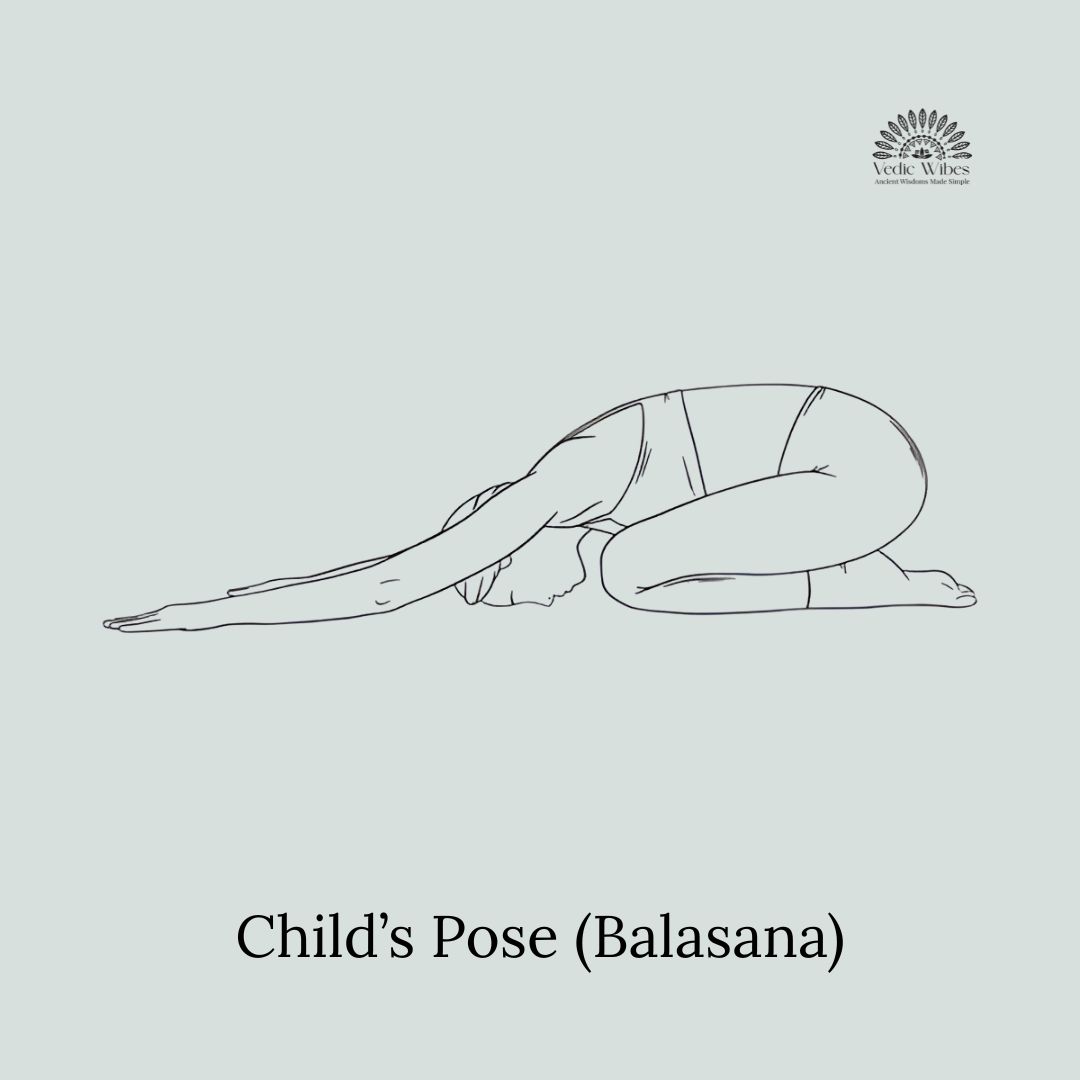
Child’s Pose Your Grounding Start :A deeply soothing Vata-Pacifying Yoga pose that releases tension and quiets the mind.

Child-pose-balasana-vedicwibes-ishita-sengupta

Steps:

  • Start on your hands and knees on a yoga mat.
  • Untuck toes and spread knees slightly wider than hip-width, keeping big toes touching.
  • Exhale, sit back onto heels, lowering torso between/on thighs.
  • Rest forehead gently on floor (use blanket/yoga block if needed).
  • Extend arms forward, palms down, or relax alongside body, palms up.
  • Close eyes, take slow deep breaths, stay several breaths or a few minutes.

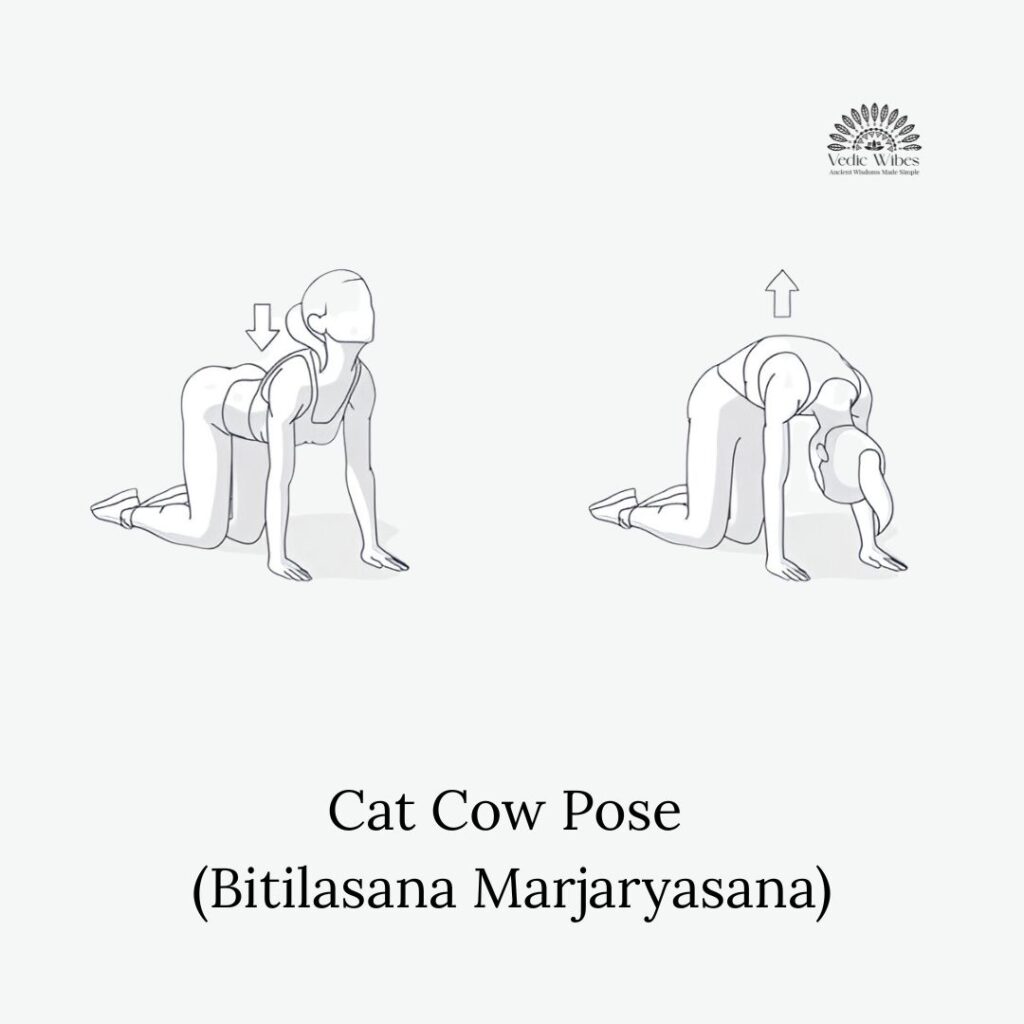
Gentle Cat-Cow Flow for Vata Imbalance: Brings rhythm to Vata’s erratic energy, warms the spine.

Steps:

  1. Begin on All Fours: Tabletop position, wrists under shoulders, knees under hips.
  2. Inhale Into Cow (Bitilasana): Lift tailbone, drop belly, open chest, gaze slightly up.
  3. Exhale Into Cat (Marjaryasana): Round spine, tuck chin, draw belly inward.
  4. Flow With Breath: Sync inhale with Cow, exhale with Cat. Practice 5–10 rounds.
cat-cow-pose-vedicwibes-ishita-sengupta

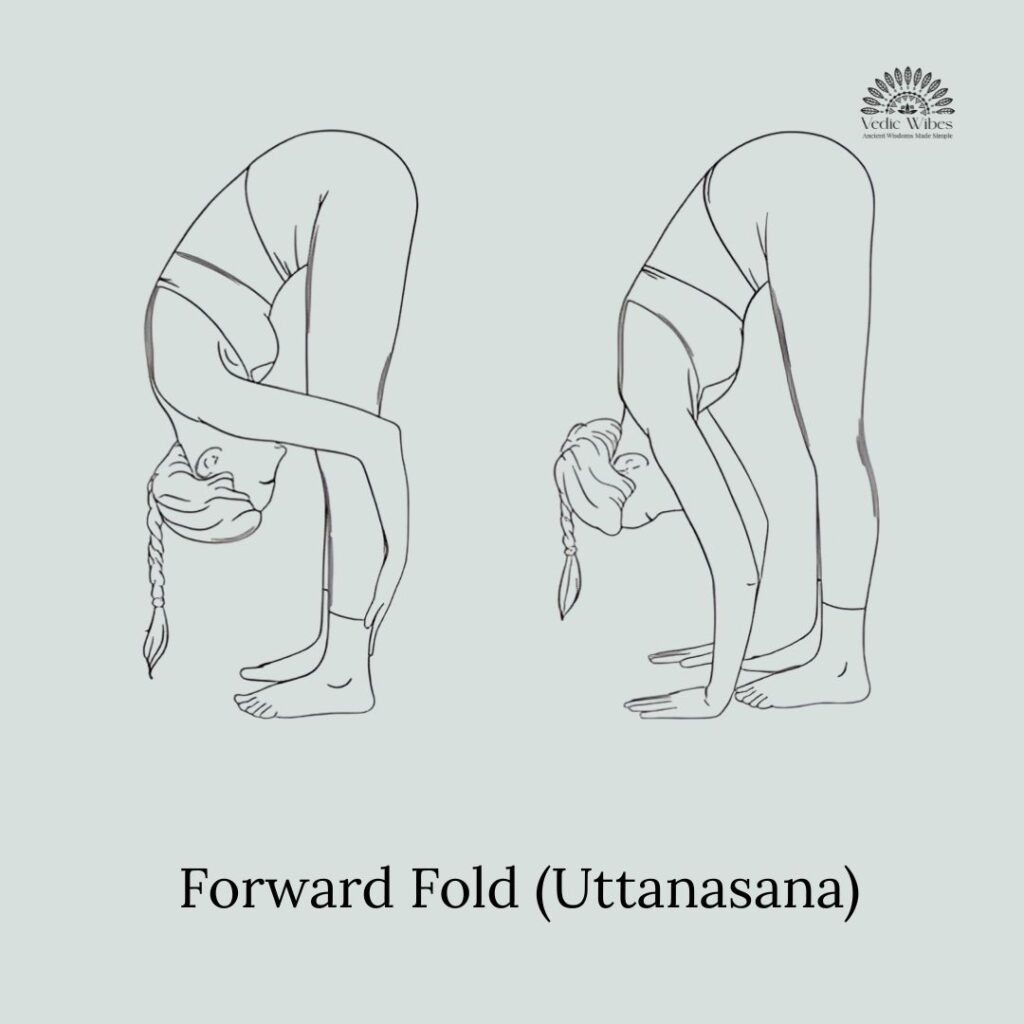
Forward Fold for Anxiety Relief :Yoga for calming Vata and anxiety; folding inward helps the mind turn inward.

Forward-fold-vedicwibes-ishita-sengupta

Steps:

  • Start in Mountain Pose (Tadasana), feet together or hip-width.
  • Lengthen spine, relax shoulders.
  • Inhale: Raise arms overhead, lift through crown.
  • Exhale: Fold from hips, head, neck, and shoulders relax; hands on floor, shins, or blocks.
  • Keep slight knee bend if hamstrings tight.
  • Hold 3–5 breaths up to 1 minute.
  • Release with Ardha Uttanasana, then slowly roll up to standing.

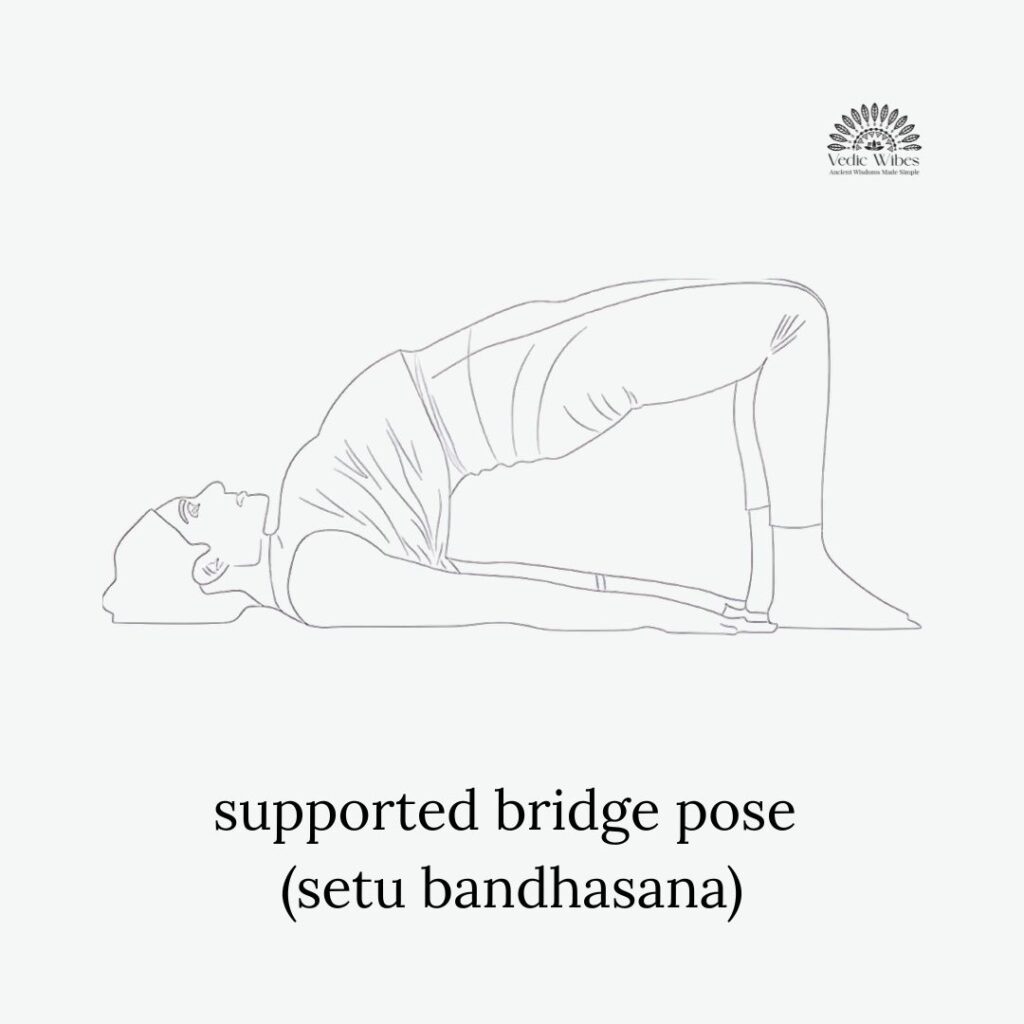
Supported Bridge Pose for Nervous System Balance :Restorative backbend, steadies heart and nourishes nervous system.

Steps:

  1. Lie on your back; keep yoga block/bolster nearby.
  2. Bend knees, feet flat, arms by sides.
  3. Lift hips, thighs parallel.
  4. Place block/bolster under sacrum for support.
  5. Relax arms, deepen breath, close eyes.
  6. Stay 1–3 minutes.
  7. Release by lifting hips slightly, remove support, hug knees to chest.


Setu-bandh-asana-vedicwibes-ishita-sengupta

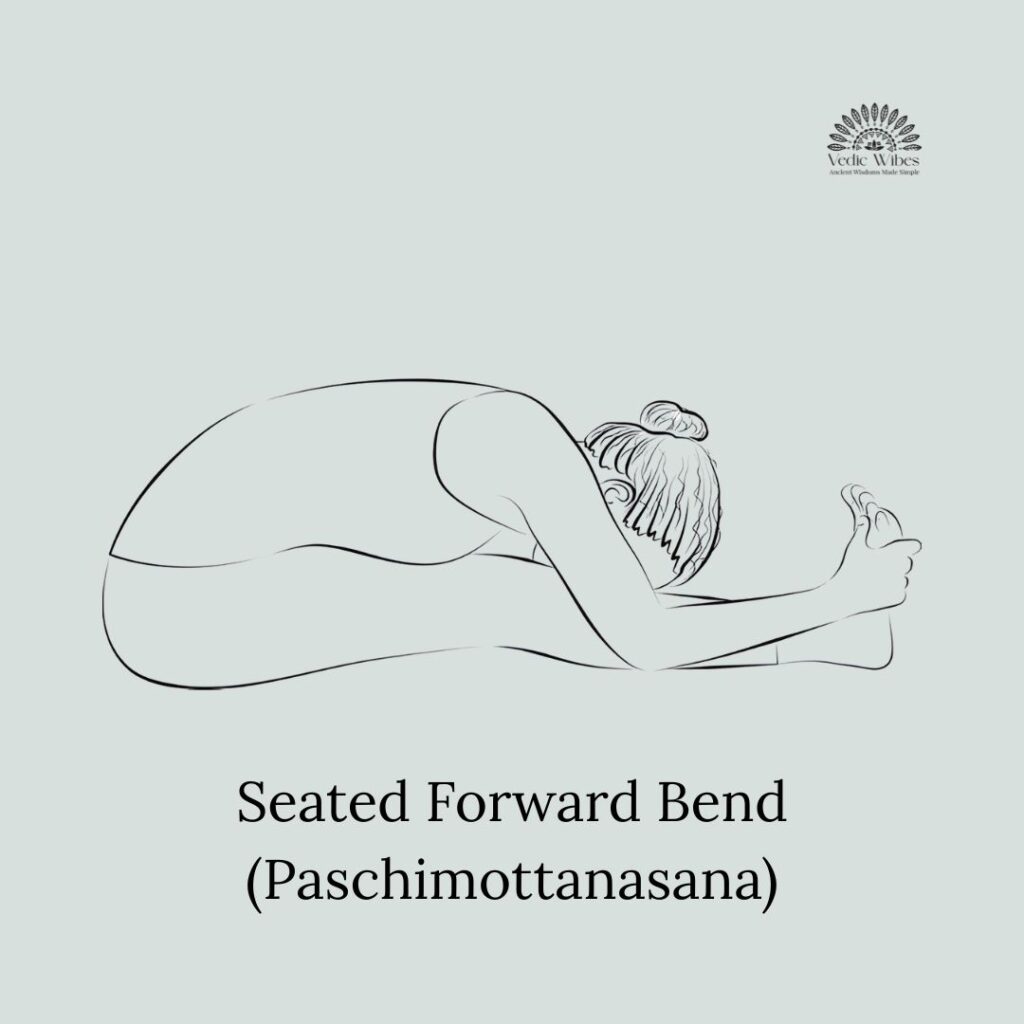
Seated Forward Bend (Paschimottanasana) : Encourages patience, calms overthinking, stretches spine.

Seated-forward-bend-vedic-wibes-ishita-sengupta

Steps:

  • Sit with legs stretched, spine tall.
  • Flex feet toward ceiling.
  • Inhale: Raise arms overhead, lengthen spine.
  • Exhale: Fold forward from hips, hands on shins/ankles/feet.
  • Hold 5–10 breaths.
  • Release: Roll up through spine slowly.


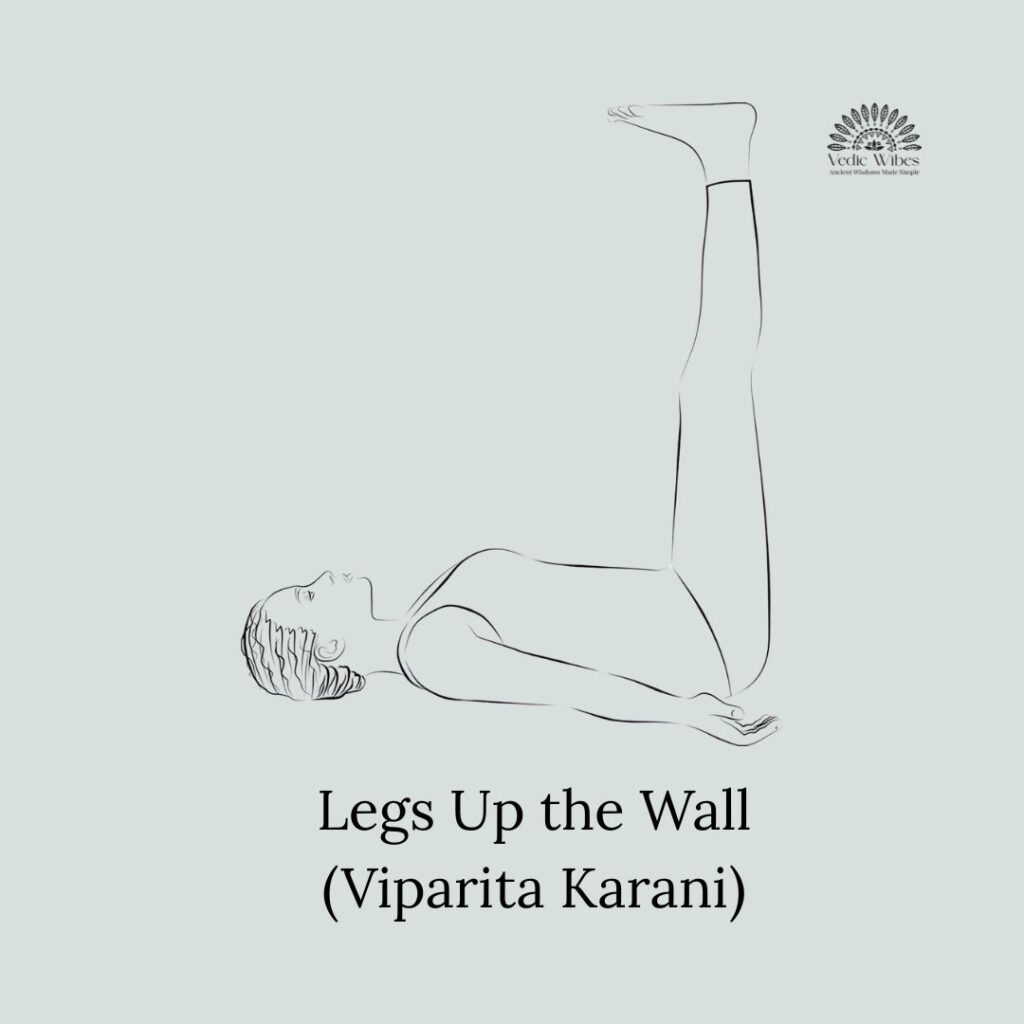
Legs Up the Wall (Viparita Karani) for Digestion :Balances energy, improves circulation, supports digestion.

Steps:

  • Sit sideways to wall, knees bent.
  • Swing legs up gently, buttocks close to wall.
  • Arms by sides, palms up.
  • Adjust for tight hamstrings or lower back (use blanket).
  • Breathe slowly for 5–15 minutes.
  • Roll to side, come up slowly.


legs-up-the-wall-vedic-wibes-ishita-sengupta

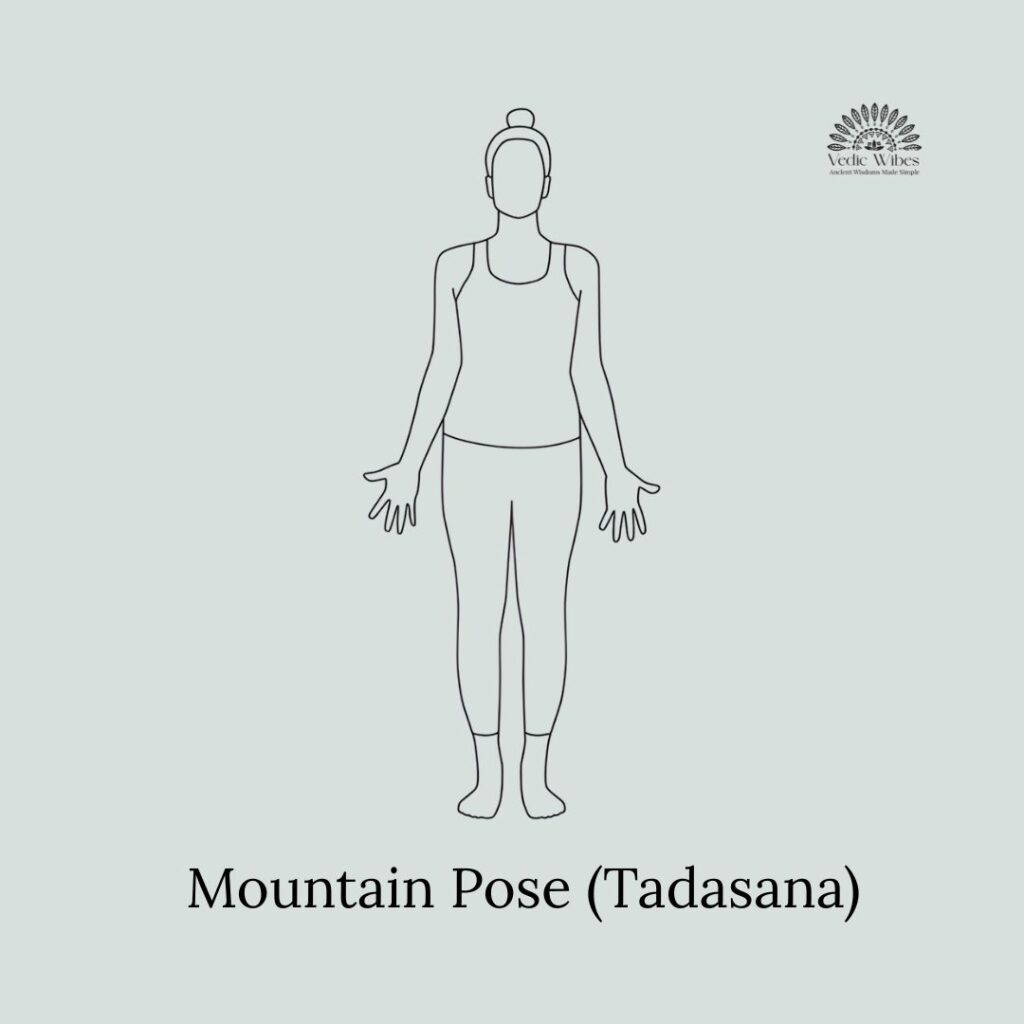
Mountain Pose (Tadasana) with Grounding Breath : Creates inner stability and presence.

mountain-pose-vedic-wibes-ishita-sengupta

Steps:

  • Stand tall, feet together/hip-width, weight evenly distributed.
  • Engage legs, lengthen spine, roll shoulders back.
  • Align head/neck, engage core, breathe deeply.
  • Hold 30 sec–1 min, then relax.


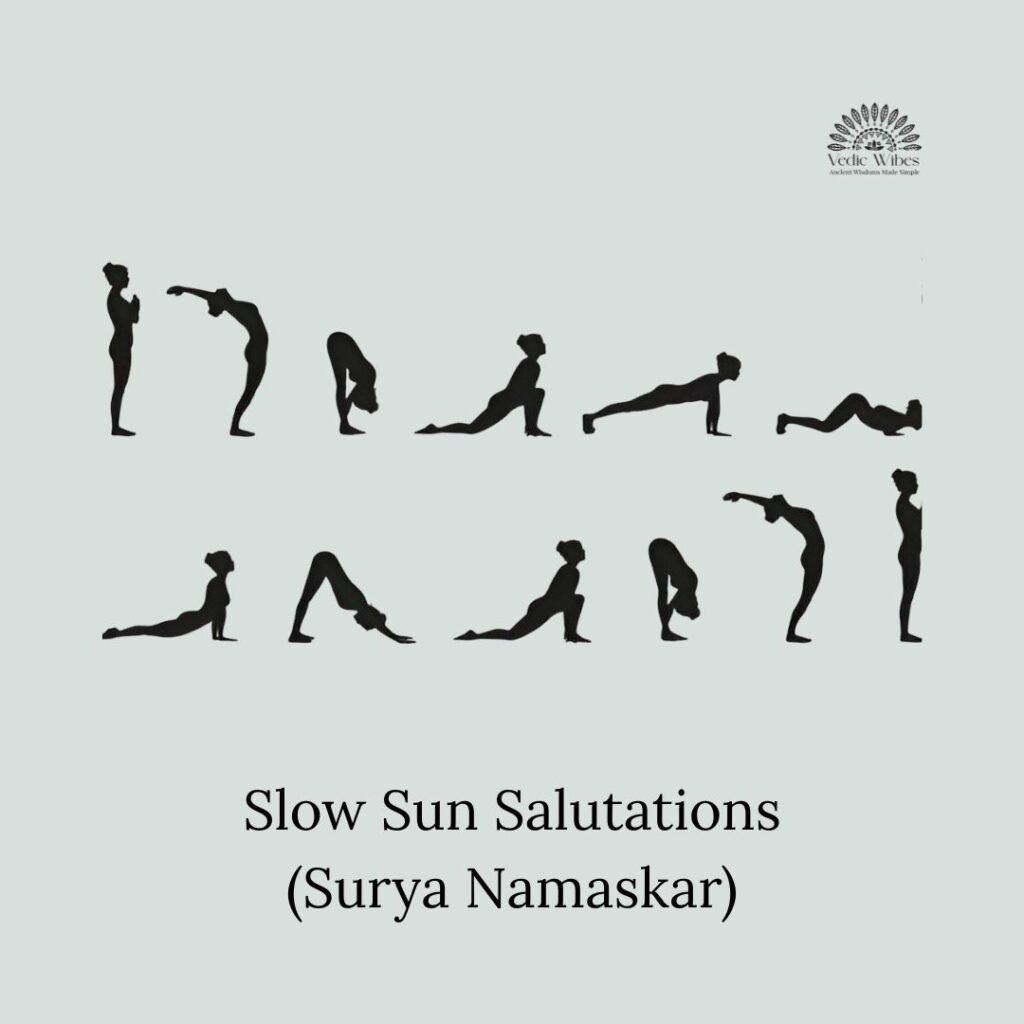
Slow Sun Salutations (Surya Namaskar) : Gentle daily practice for Vata, warms body without overstimulation.

Steps:

  1. Pranamasana: Hands at heart.
  2. Hastottanasana: Arms overhead.
  3. Uttanasana: Forward fold.
  4. Ashwa Sanchalanasana: Half lunge.
  5. Phalakasana: Plank.
  6. Ashtanga Namaskara: Eight-point pose.
  7. Bhujangasana: Cobra.
  8. Adho Mukha Svanasana: Downward Dog.
  9. Repeat lunge, fold, raise arms, return to Pranamasana.
sun-salutation-vedic-wibes-ishita-sengupta

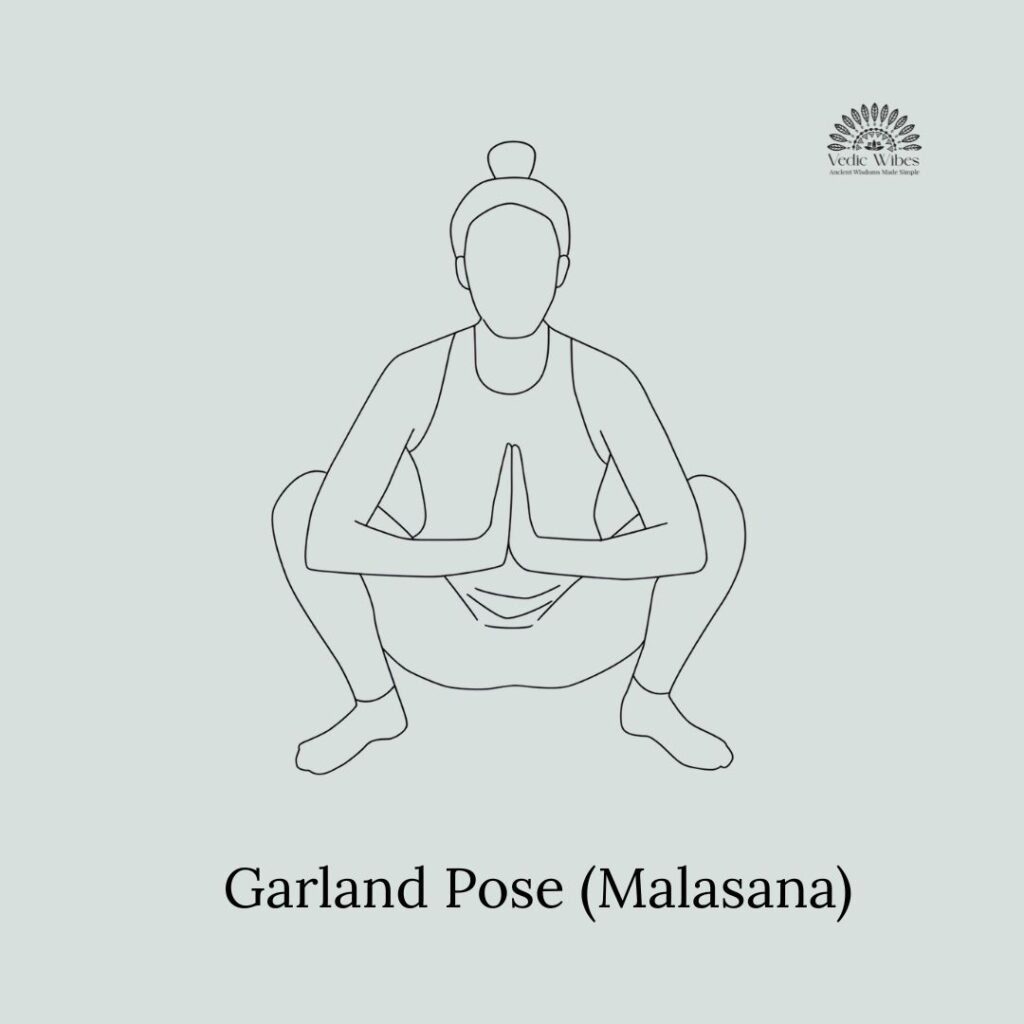
Garland Pose (Malasana) for Digestion: Balances apana vayu, supports digestion and elimination.

garland-pose-vedic-wibes-ishita-sengupta

Steps:

  • Stand, feet wider than hips, toes slightly outward.
  • Squat, heels on floor (use blanket/block if needed).
  • Torso forward, spine long, chest open.
  • Hands in Anjali Mudra, elbows press knees.
  • Hold 5–10 breaths, release slowly.

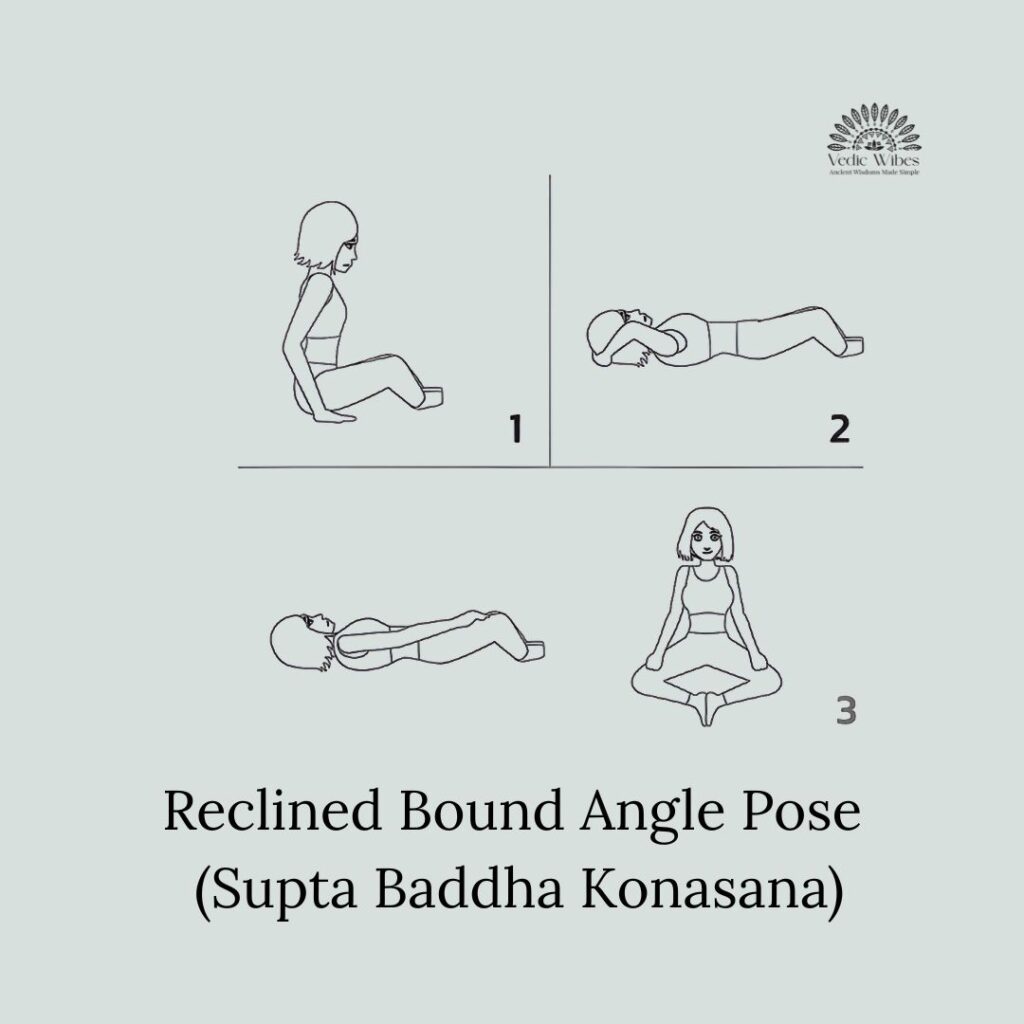
Reclined Bound Angle Pose (Supta Baddha Konasana) : Opens hips, relaxes nervous system.

Steps:

  • Lie on back, knees bent, soles together, knees out.
  • Adjust pelvis (use props if tight).
  • Arms by sides or on belly/heart.
  • Breathe 3–10 minutes, release gently.


reclined-bound-angle-pose-vedic-wibes-ishita-sengupta

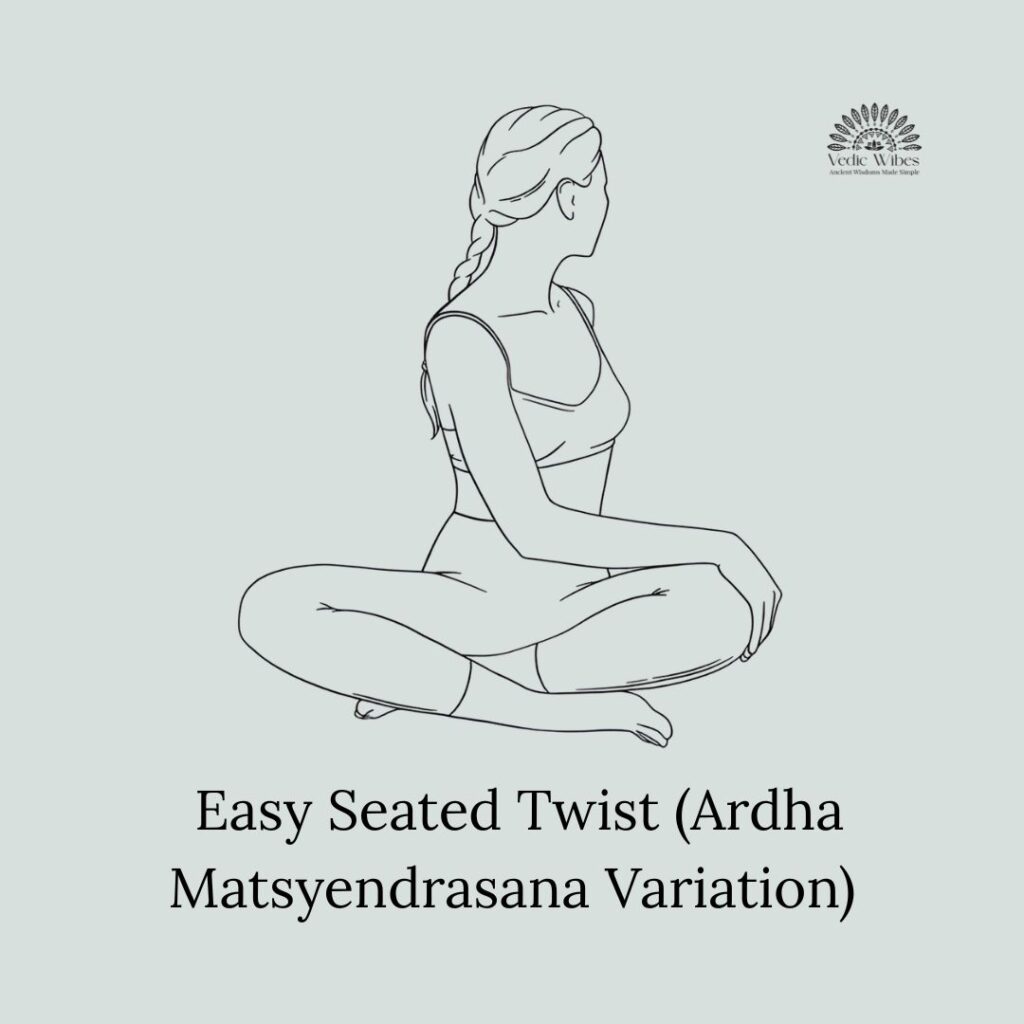
Easy Seated Twist (Ardha Matsyendrasana Variation) : Twists massage the belly, improve digestion.

easy-seated-twist-vedic-wibes-ishita-sengupta

Steps:

  • Sit cross-legged, spine tall.
  • Right hand on left knee, left behind on floor/block.
  • Inhale to lengthen, exhale to twist gently.
  • Hold 3–5 breaths, release, repeat opposite side.


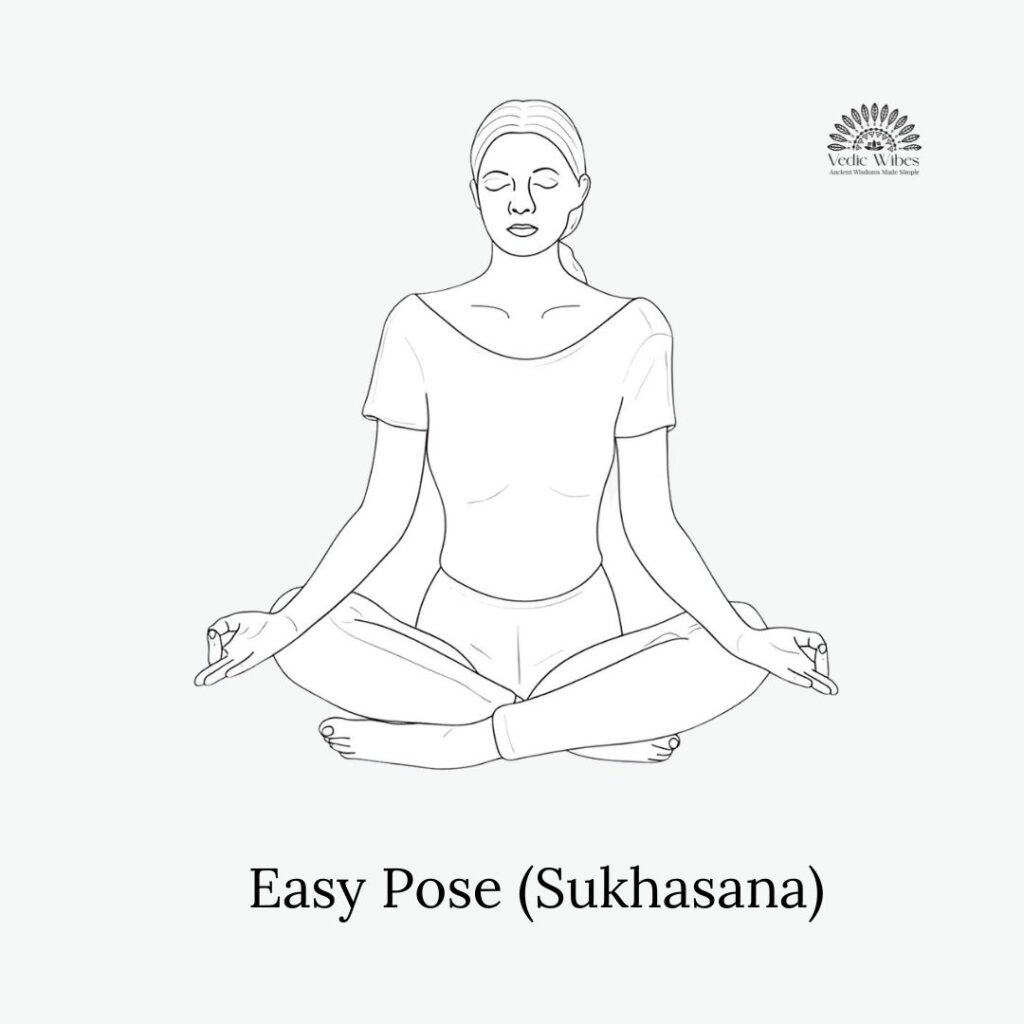
Sukhasana (Easy Pose) : Beginner-friendly seated posture, promotes relaxation, mindfulness, and posture.

Steps:

  • Sit cross-legged, spine straight.
  • Hands on knees/thighs.
  • Soft gaze or eyes closed, breathe deeply 2–5 minutes.
  • Release by uncrossing legs slowly.


sukhasana-vedic-wibes-ishita-sengupta

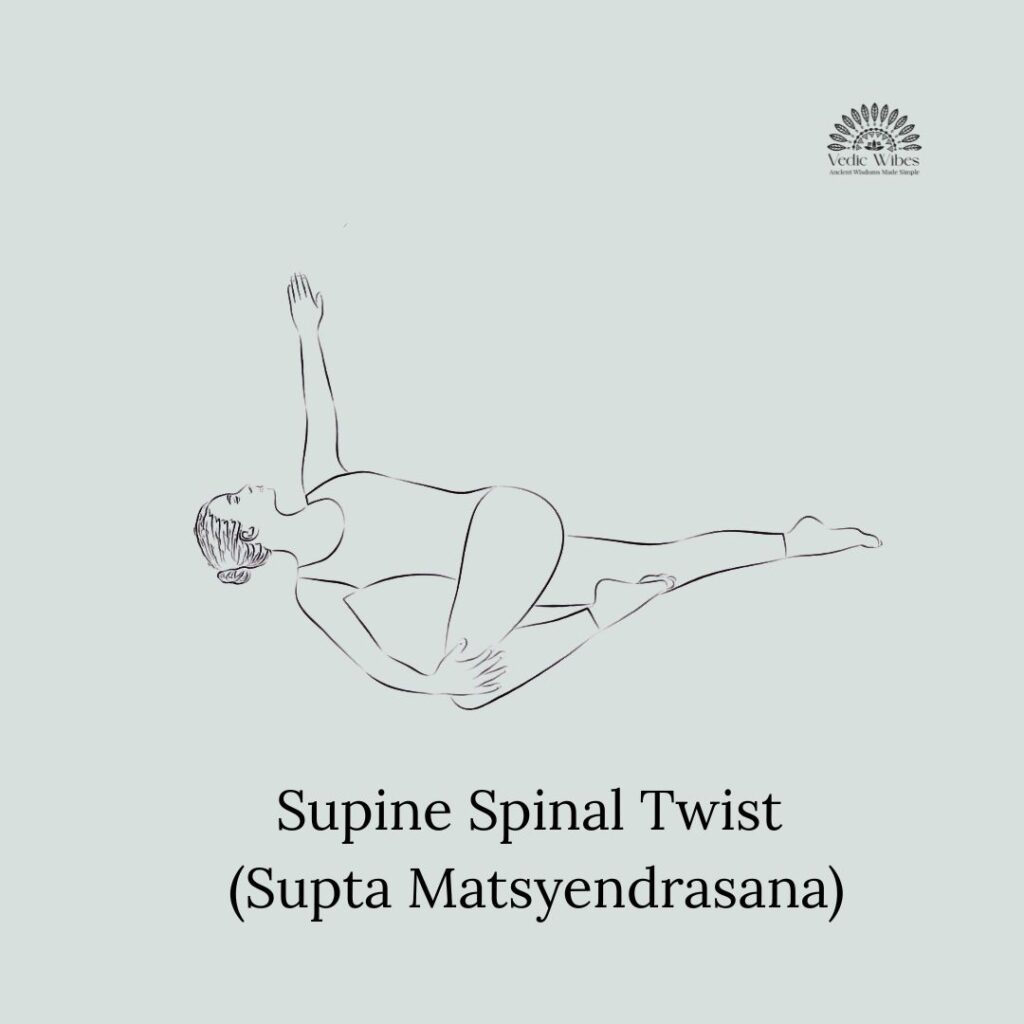
Supine Spinal Twist: Eases lower back stiffness, calms Vata nervous energy.

supine-spinal-twist-vedic-wibes-ishita-engupta

Steps:

  • Lie on back, bend right knee, guide across body to left side.
  • Right arm out, turn head opposite if comfortable.
  • Hold 5–10 breaths, repeat other side.

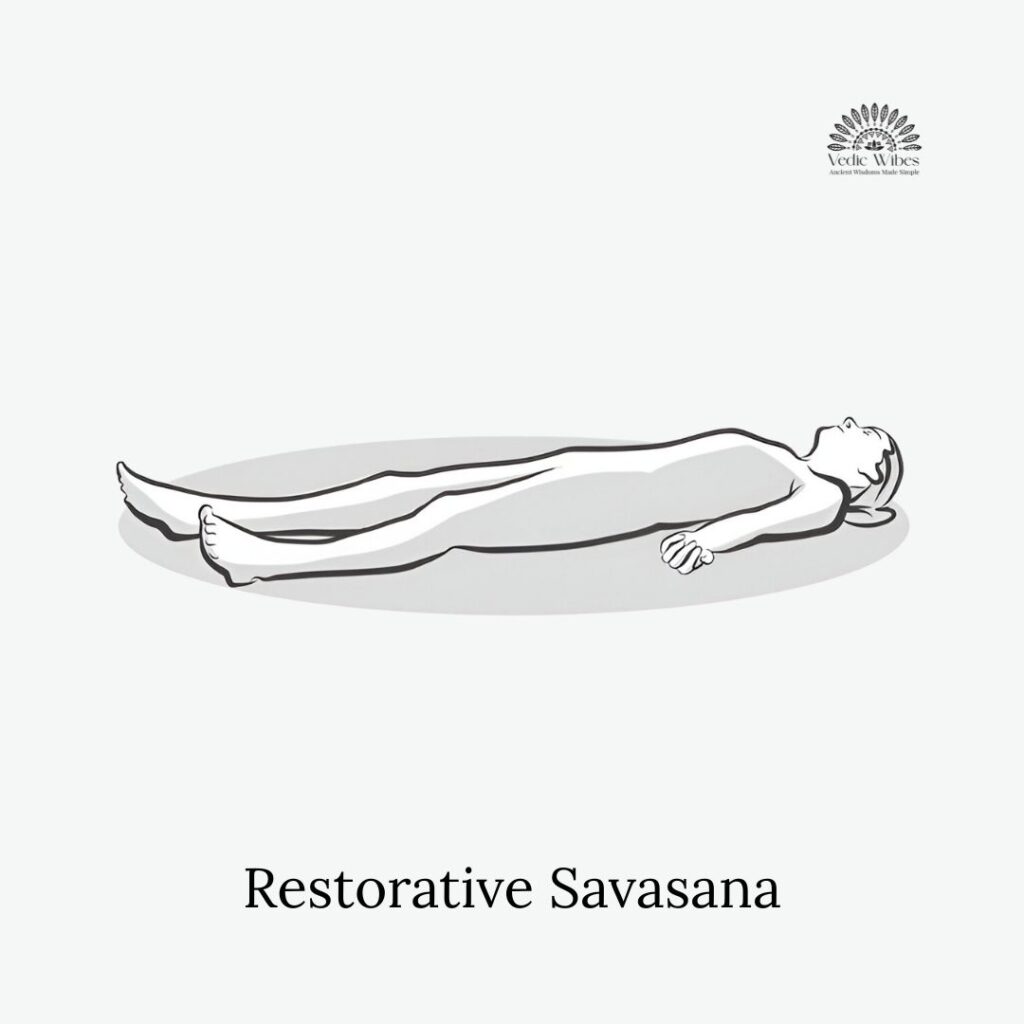
Restorative Savasana with Blanket : Deep rest, warmth, comfort for Vata.

Steps:

  • Lie on blanket with props under knees/head if needed.
  • Cover with blanket, arms by sides, palms up.
  • Close eyes, breathe naturally, stay 5–15 minutes.
  • Gently return by rolling to side, press hands, rise slowly.


restorative-savasana-vedic-wibes-ishita-engupta

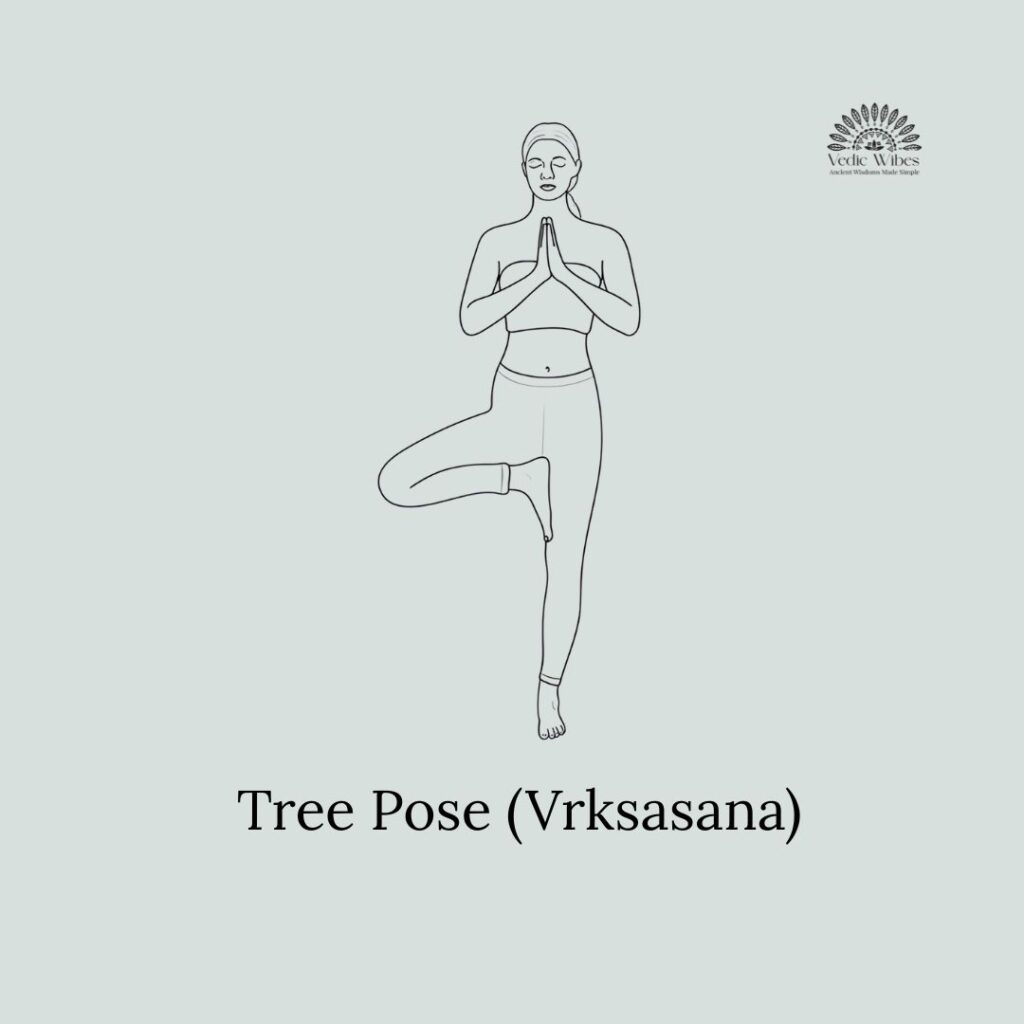
Tree Pose (Vrksasana) with Wall Support : Grounding Vata balancing yoga pose, builds balance and focus.

tree-pose-vedic-wibes-ishita-engupta

Steps:

  • Start in Tadasana, shift weight to left foot.
  • Place right foot on inner thigh/calf.
  • Hands in Anjali Mudra, optionally raise overhead.
  • Hold 20–60 seconds, release, switch sides.


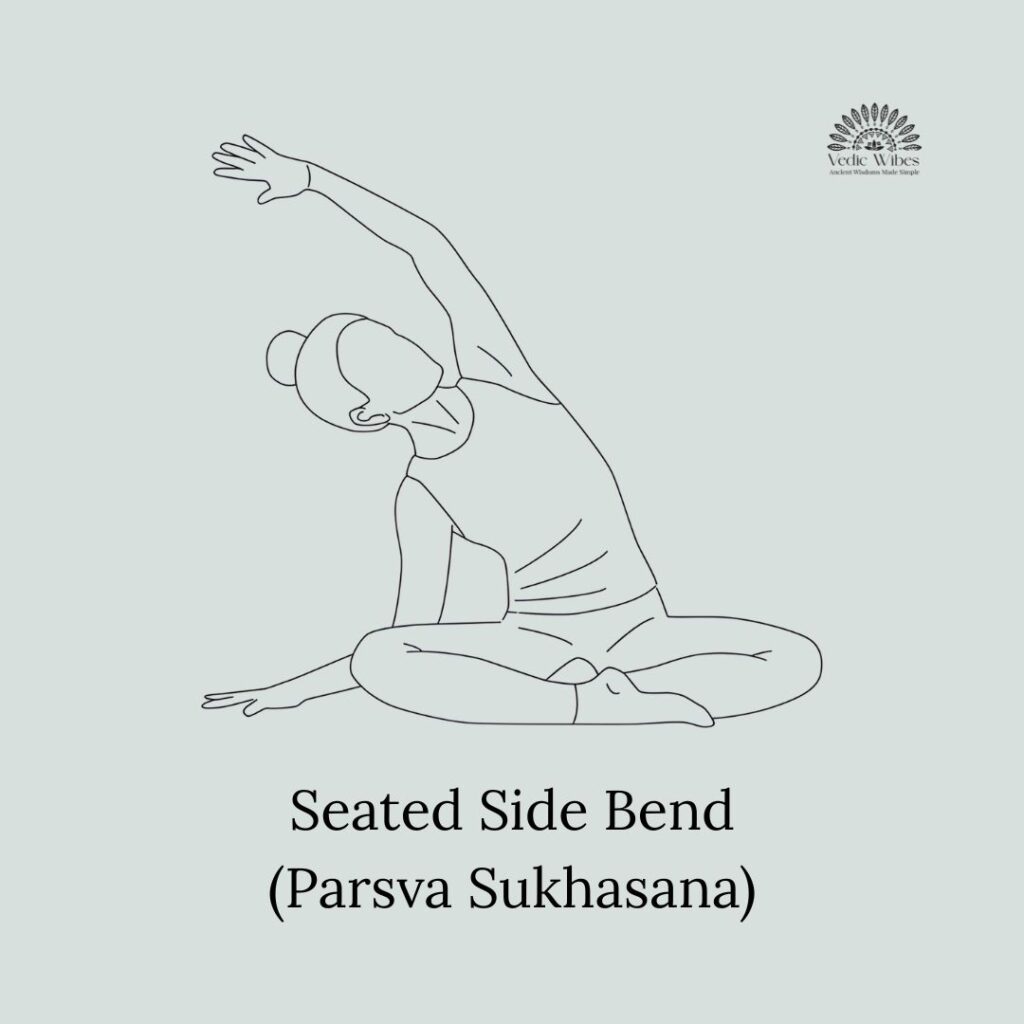
Seated Side Bend (Parsva Sukhasana) : Balances Vata stiffness in ribs and side body.

Steps:

  • Cross-legged, spine tall, shoulders relaxed.
  • Right hand to floor, left arm overhead, bend gently.
  • Hold 3–5 breaths, inhale back upright.
  • Repeat other side.


seated-side-bend-vedic-wibes-ishita-engupta

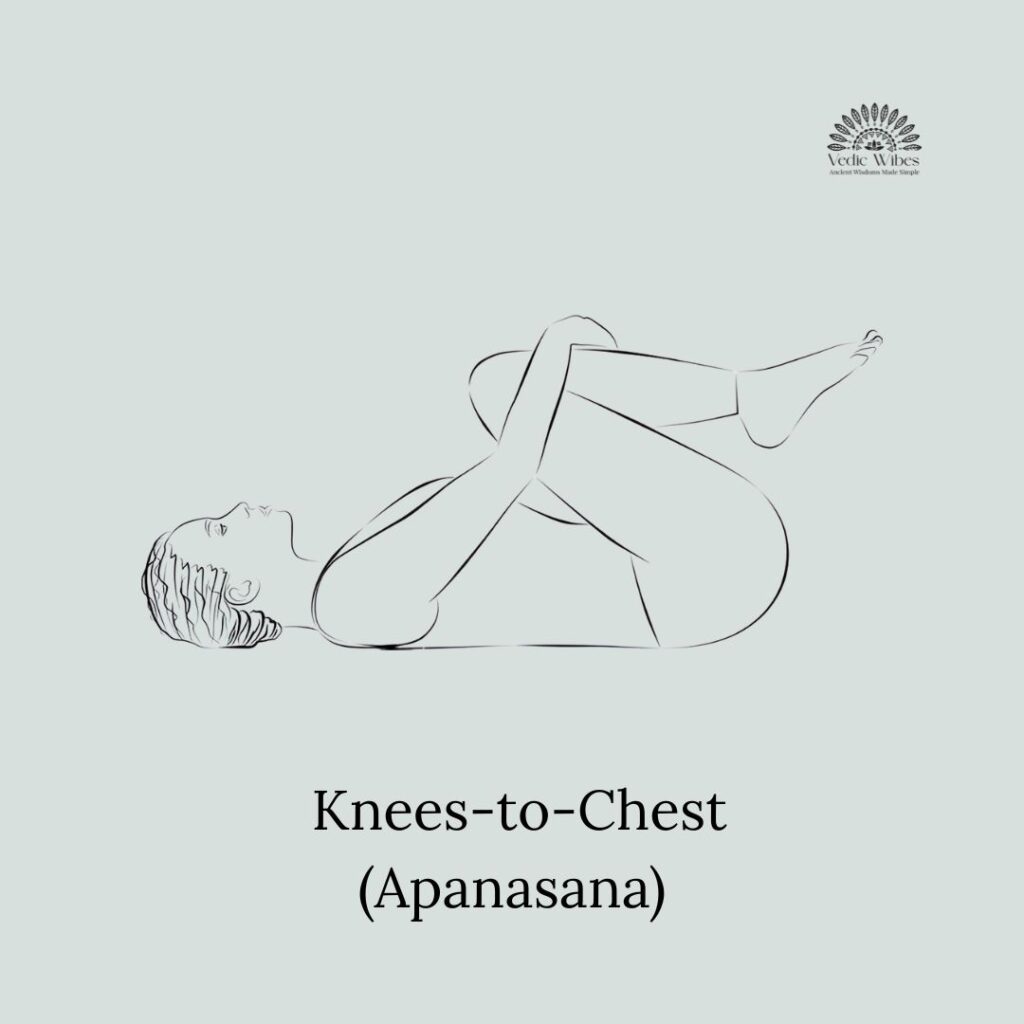
Knees-to-Chest (Apanasana) — Wind-Relieving Pose : Supports digestion and bloating, common Vata issues.

apanasana-vedic-wibes-ishita-engupta

Steps:

  • Lie flat, draw knees to chest, hug gently.
  • Rock side to side, or one leg at a time.
  • Hold 5–10 breaths, release.


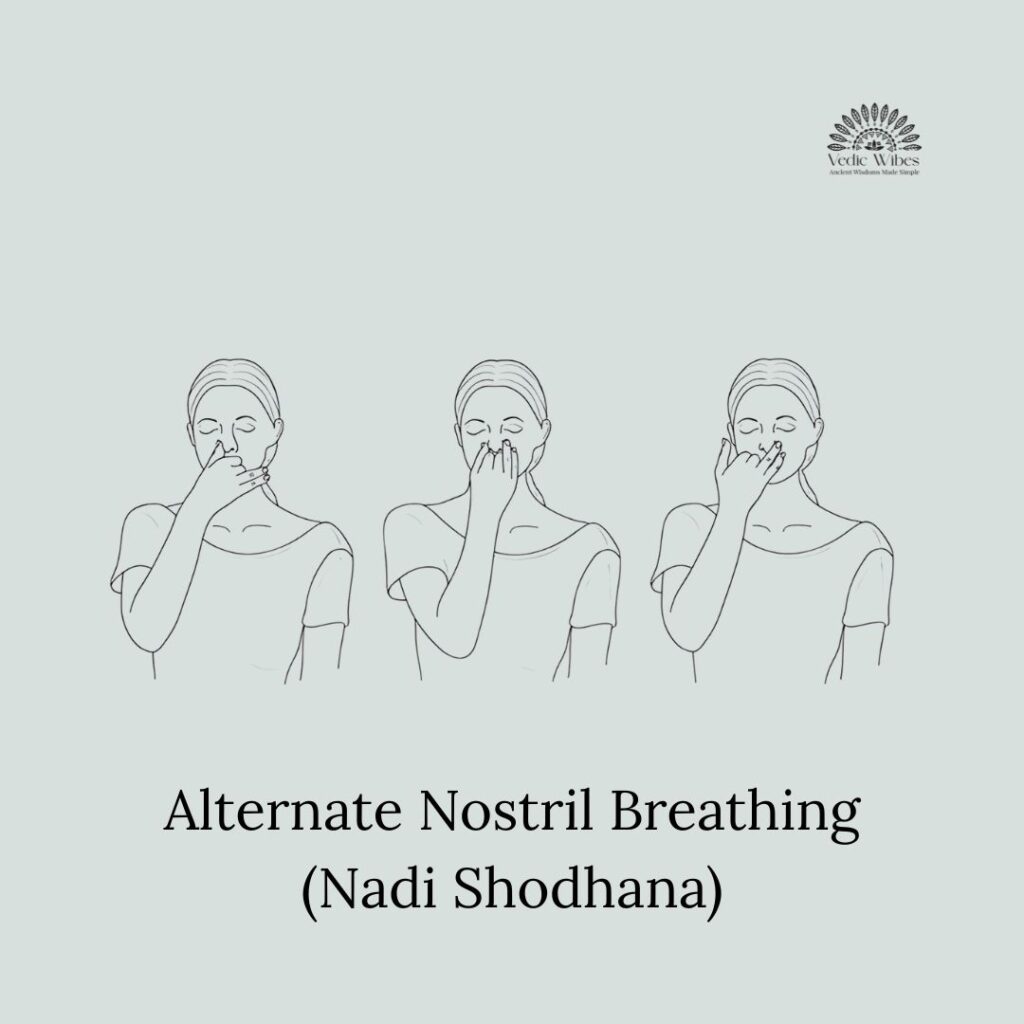
Alternate Nostril Breathing (Nadi Shodhana) : Balances brain hemispheres, soothes Vata anxiety

Steps:

  • Sit cross-legged or chair, spine tall.
  • Right hand in Vishnu Mudra, left hand on knee.
  • Inhale left nostril, exhale right; inhale right, exhale left.
  • Complete one round.


alternate-nostril-breathing-vedic-wibes-ishita-engupta

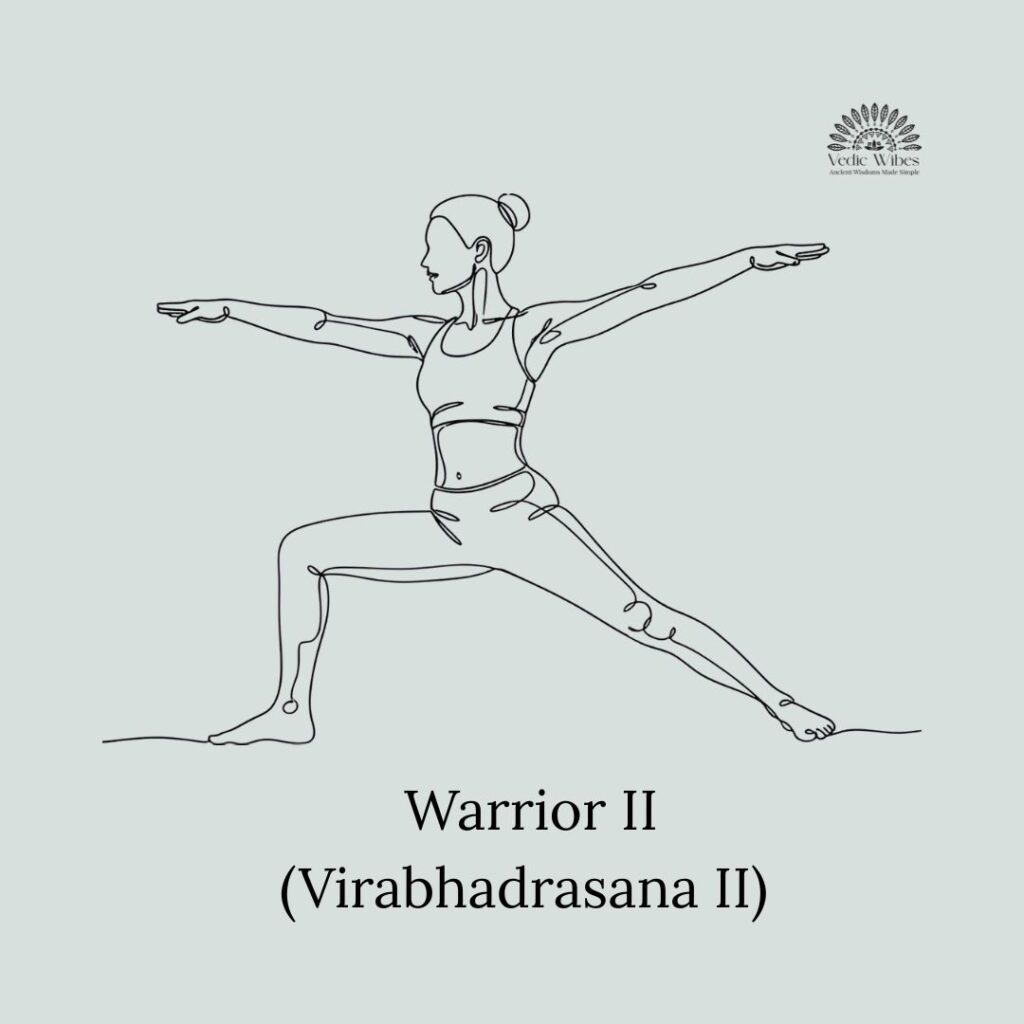
Warrior II (Virabhadrasana II) — Held Slowly : Strong yet steady, anchors scattered Vata.

warrior-ii-vedic-wibes-ishita-engupta

Steps:

  • Start in Tadasana, step feet 3–4 ft apart.
  • Right foot out 90°, left foot 15–20°.
  • Bend front knee, thigh parallel.
  • Stretch arms, gaze over front fingertips.
  • Hold 5–10 breaths, switch sides.


Ayurvedic Wisdom Reminder

  • As Ashtanga Hridayam shares:
    “When Vata is disturbed, the body trembles like a dry leaf in the wind. To calm it, one must embrace warmth, stability, and rest.”

  • These Vata-Pacifying Yoga poses bring warmth, steadiness, and calm into life.

Vata-Pacifying Yoga- FAQ

Q1: Best yoga for Vata imbalance?

Slow, grounding poses like Child’s Pose, Legs Up the Wall, Savasana.

Q2: How to balance Vata dosha with yoga?

Gentle  daily yoga routines , with warmth and relaxation.

Q3: Can yoga help anxiety from Vata imbalance?

Yes: forward folds, supported poses, alternate nostril breathing.

Q4: Is there a 30-day yoga challenge for Vata imbalance?

Yes: one pose daily, building into a calming sequence.

In a Nutshell

  • Balancing Vata is about doing less with intention.
  • These 19 Vata-Pacifying Yoga poses give warmth, steadiness, and calm.
  • Try poses like Apanasana or Legs Up the Wall today.
  • Over 30 days, small practices lead to a powerful shift.
  • Stay close to Vedicwibes for more Ayurvedic yoga sequences and timeless wisdom.

About The Author

17cc75a90911d6dda0d052d8c1ccde8ffa4f6b9cfd55e000523cdebe5f88cc15?s=150&d=mp&r=g
Ishita Sengupta
Vedic Wibes |  More Posts

Ishita Sengupta is a wellness educator and founder of Vedicwibes. She shares practical Ayurvedic tips and mindful living strategies for people looking to live healthier, balanced lives. Her approach blends ancient wisdom with modern practicality, making wellness simple, effective, and enjoyable.


Scroll to Top